
By M.L. Anderson
Over the years I’ve fished with a lot of pros, and the one lure they all agree on is jigs. Jigs are not only versatile, they’re known for being big-fish baits. There are a lot of ways to make a jig even more attractive or effective no matter what time of year you are fishing. Here are fifty of the best jig tips I’ve gotten from the pros.
1. Don’t buy cheap jigs unless you’re only going to use them for pre-fishing. Get the best jigs you can, and that means jigs with great hooks. Yamamoto jig heads have Owner or Gamakatsu hooks.
2. For better hooksets, modify a rubber-skirted jig by trimming the weed guard down to just above the point, then thin it down by cutting off about a ¼” of the bristles from the front. Spread the rest of the weed guard bristles out.
3. Add rattles to the hook, especially if you are hopping or shaking a jig.
4. In slower, colder months pitch the jig at a target and don’t move it – just shake it around a little to make it rattle, then move on to the next spot.
5. If it’s cold out, pork trailers are hard to beat. Try keeping a container of scent at the front of the boat, and soak your jig and pig in it when it’s not in the water. It will keep it from drying out and keep it scented at the same time. Use a snap-on lid rather than a screw-on lid so your line doesn’t get wrecked.
6. The more active the fish are, the heavier your jig can be and the faster you can move it.
7. In very clear water use a heavier jig or use tungsten – you want it to fall faster in clear water so it’s more of a reaction bait.
8. In cold water, try putting two skirts on your jig – it will make it fall slower.
9. When you’re flipping, most bites come on the fall. If the fish are inactive, go for a slow fall. If the fish are very active, go for a faster fall.
10. On shallow flats, try swimming and bouncing a Gary’s Swim Jig over the flat like a crankbait. For the skirt, match the hatch: craw or baitfish. Use a Hula Grub or a Kreature Bait.
11. Hookset: When fishing a big jig, point the rod right at the jig and reel up the slack until you feel the fish. The instant the rod loads up, hit it hard.
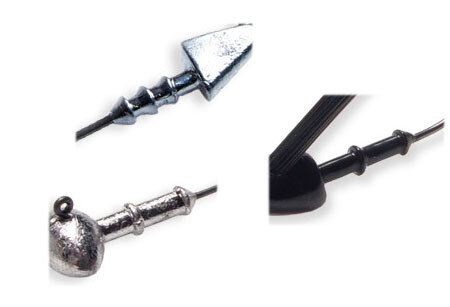
12. Many of the Yamamoto jigs have a couple of thicker rings on the collar instead of a barb, which are great for Hula Grubs. They don’t tear the soft baits as much as barbs do.
13. For shallow dragging, a 3/8-ounce jig goes over the rocks a little more easily.
14. When using grubs as a trailer, a Yamamoto Single Tail Grub fished really slowly will give you more action. Sometimes the twin tails on the Double Tail Hula Grubs will stick together if you’re fishing slow, although a scent applied to the tails really helps them not to stick.
15. Always use scent on skirts. It can make the fish hold on for just that few more seconds you need for the hookset.
16. When dragging a jig and you come to a rock or stump, you can feel the bait crawl up. When it starts to fall, stick the rod out and lean forward a little to allow the jig to fall right next to the stump — put the reel in free spool if you have too, until it touches bottom again. Once it hits, click the reel and then inch it forward. If you stay back with tight line, it will pendulum out — and if a fish is holding tight, you’ll miss him.
17. Before you fish a jig with a rubber skirt, hold it by the hook and dip it in the water upside down so the skirt sticks together. Trim the skirt off about an inch to inch and a half from the head. You end up with two layers for more movement and a fuller profile since the short layer in inside.
18. For a lion’s mane, separate the two parts of a rubber skirt. Cut the head part really short – this gives it an actual body and head like a craw and a tail.
19. Slide a little piece of Yamamoto worm or grub onto the shaft of the hook under the skirt to add bulk and color. It also holds scent, and it can hold a pork chunk in place. This also makes a heavier jig fall a bit slower. Use contrast for dirty water. Thicker worms also give a better feel when bit. Make the piece long enough so it covers the hook just to where it starts to bend. Save your chewed up worms and grubs for this purpose.
20. When adding pork to a jig, put it on so that the fat side is down and the thinner legs are on the side that the hook is curved toward. This gives the legs more action.
Have you tried fishing a Senko on a jighead?
21. Keep a hook sharpener handy all the time – get one that clips to your shirt and get in the habit of touching up the hooks often.
22. Learn about crawdads, since this is what your jig mimics most of the time. What color are they right now? What do they eat and where? Know the prey to know the fish. Yamamoto has tons of colors to match just about any craw or baitfish.
23. Try using a white hair jig with a Single Tail Grub trailer (40- and 18-series) and drop it into the middle of trees. Pitch it in and give a shake to see if anybody is home. Use Natural Shad (306), Blue Pearl with silver flake (031), or Luminous White (038). Put a dab of red marker on it.
24. If you’re facing miles of tules and don’t know where to start, look for darker water near the tules. Darker means deeper. Pitch your jig there.
25. In current, cast up and let the current carry your jig to the target.
26. On a vertical wall or piling, count your jig down. You can reel it up and re-try if you don’t get bit.
27. Your jig rod needs backbone, but don’t overpower it or it can make you lose fish. Look for a rod specifically designed for the jig weight you’re fishing.
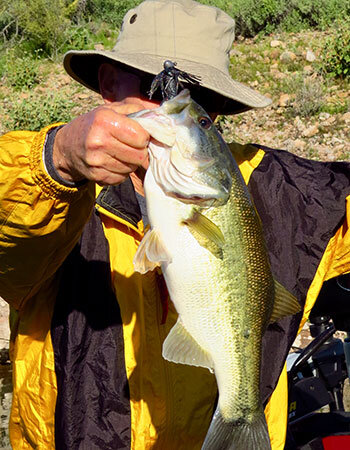
28. Gary Dobyns says there is no wrong way to fish a jig: bounce it down walls, drag it, hop it, swim it, make it act like a fish or a craw – you’re still going to catch fish on it. He likes to use 5-inch Yamamoto Hula grubs on football head jigs, all the way from ¼ oz to one-tonners.
29. When you are dragging a jig the fish usually strike it aggressively, but when you lift and drop it, the bite can be more subtle, so use a heavy jig when you’re lifting and dropping – you’ll know what it feels like, so you’ll notice immediately if there is a change. That means a fish has it.
30. Use a high speed reel with jigs, especially when you are fishing deeper water. The high speed will let you catch up with the fish if it heads toward the surface, so you can get the line taut and get a good hookset.
31. If you get snagged while dragging a jig, reel the line up tight, put your thumb on the spool, point the rod straight at the jig, and pull back. This usually frees it up. Don’t forget to touch the hook point up and check your knot and line before re-casting.
32. If pointing and pulling doesn’t free the jig, go back over it and shake it loose. It’s usually quicker than re-tying.
33. In really muddy water, try a black and blue or brown and brown jig with pork and rattles. Use a bit of dark red, purple, or orange worm or grub to keep the pork in place.
34. Cut slits across the fat side of the pork, right up to the rind – just deep enough that the slices allow the pork to undulate.
35. Try never to let the fish make you change directions when you’re reeling him in. You can actually boat a fish that doesn’t even have the barb through if you keep him coming in one direction.
36. When you cast a jig out, hold the rod down and watch the line. If a fish sucks it in on the fall he might move sideways, but he might come right at you. Let the line free spool until the jig hits bottom.
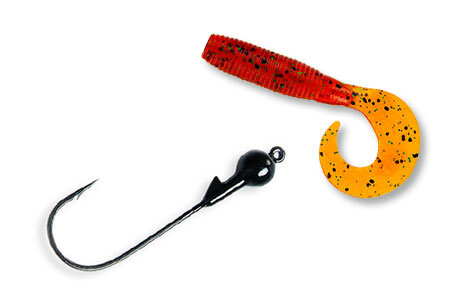
Gary’s Swim Jig and Single Tail Grub
37. When a storm is coming and the fish have suspended, put a Single Tail Grub on a Gary’s Swim Jig. Count it down and swim it through them.
38. The bite on heavy jigs: the weight just goes away. You feel it, then there’s nothing. Set the hook. Violently!
39. Aaron Martens says that the Palomar is the worst knot for fluorocarbon because it breaks. It’s okay for mono, but if you’re using fluorocarbon line with a jig, use a double uni. Use 5-6 wraps for fluorocarbon, 8-10 for braid.
40. Dean Rojas says for braided line in grass use a snell knot and 65# braid.
41. In current, if you want your jig to float down slowly, pare it down or switch to a smaller jig, then put a piece of sponge or Styrofoam rubber on the hook shaft. This trick from Jeff Magee works really well in shallow water.
42. When you open a jar of pork trailers, throw them all in a bucket of water. Some will float and some will sink. Mike Folkestad takes those floaters and puts them in a rock tumbler with some rocks (after slicing the fat part a bit) and tumbles them for about half an hour. This makes them very soft and mushy. He can put a bit of Rit dye in there as well to give them any color he wants. And he never uses pork without slicing the fat part all the way to the rind like in number 34, except he puts hash marks across the body.
43. Jim Jared prepares 8 pork trailers before every tournament, marinating them in scent solution to remove the bitter taste. He changes baits every 15 to 30 minutes and puts the used bait in a different jar of solution than the unused baits.
44. Jared also trims his pork trailers. Besides putting in the slits, he’ll cut the front corners off to make a point at the hole end for fishing heavy cover and shave off half the fat to make a thinner bait if he wants a faster fall.
45. Here’s how Jim Jared fishes a jig: pitch, let line bow, follow bait down, don’t impede fall. Keep finger on line. Watch line. If it moves, reel down and set the hook.
46. Don’t pull a jig over limbs, let it down over the side and jig it up and down a bit.
47. Jared: Reel back fast once you’ve fished your target. If you think a fish is between you and the boat, you should have cast there in the first place.
48. If you miss a fish, don’t reel in. Let the bait down. He might come back.
49. Pork works better in cooler water. Once the water hits about 75 degrees, it’s not as effective, says Jared.
50. For smaller swimming jigs, hammer them flat and glue eyes on them. You can even paint them first. If you use googly eyes from the craft store they will even rattle a bit.