
By David A. Brown
The pattern is nearly as predictable as a Hallmark movie, but how a cold front impacts your fishing is less certain. What’s the difference? Ask Arizona pro Tai Au and he’ll tell you it has a lot to do with your perception and performance.
For starters, Au points to the meteorological changes a cold front brings.

“When the barometric pressure is low, you’re typically going to see that clouds are lower,” he said. “Typically, the fishing is good, especially if you fish anywhere from zero to 30 feet of water. Atmospheric pressure changes at exactly 32 feet. With that being said, the deeper fish are less affected by barometric pressure.”
Once a front passes, air temperatures plummet, skies clear and the dreaded bluebird skies deliver super-bright and mostly calm conditions. What does this mean? Well, if you’ve ever seen a bass wearing sunglasses or a wide brim hat, you’ve got one up on the rest of us. Fact is, post-frontal days are some of the toughest because conditions become unbearable for the bass.
“If you’re fishing on a post-front day, it’s not that the fish aren’t there, they’re just less active and less willing to chase baits” Au said. “That’s what makes fishing a lot harder. Another theory is that they fed really good before a front.”
So, what do you do when your fishing day presents a cool, crisp complexion with little to no wind and lots of sunshine? Au says you can certainly resign yourself to enjoying a nice day of pleasure boating; but if you’re all about that bass (not the Megan Trainor pronunciation), you can still get it done.
“There are ways to catch fish if you know how to make the adjustments,” he said.
DEPTH CHARGE
One of those adjustments might be to fish deeper water where the bass are less impacted by post-frontal conditions. This option obviously requires more searching than a bank-running strategy, but when you locate fish, they’re generally more cooperative.
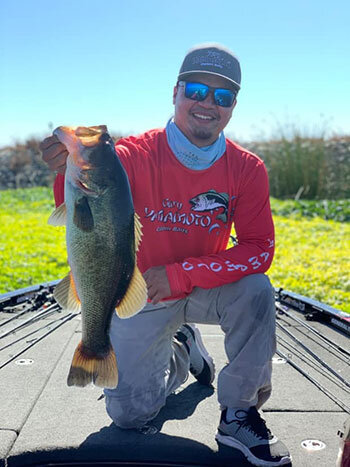

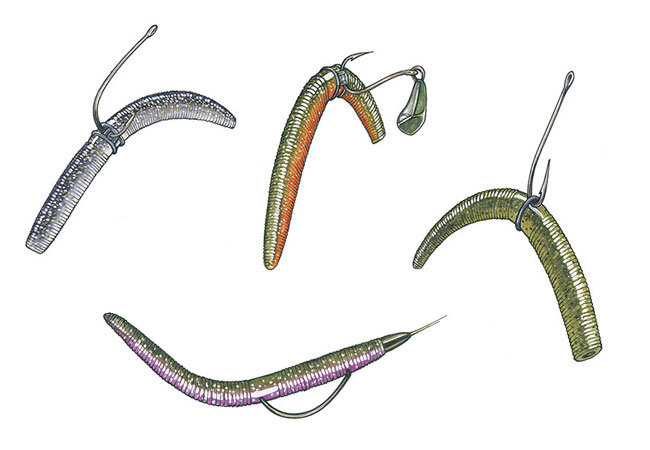
Au’s top choice for the deep game is a 3-inch green pumpkin Yamamoto Fat Senko on a 1/16-ounce Nichols Toadstool Ned head. Admitting that he resisted Ned rigs for years, Au now holds a robust respect for this modest, yet undeniably effective bait.
“You want to fish high-percentage areas where fish like to concentrate like a secondary point, a hump or deeper habitat such as brush piles, big boulders, wood — something different that fish can relate to,” Au said. “
“It’s a finesse presentation; it’s all about the fall. The reason you want to use a light head is that when you throw it out there on a spinning rod and let it free fall, that 3-inch Senko will dive down in a circle and that will trigger a lot of bites.”
Notably, Au references an article summarizing a bass feeding study in which tank fish would eat crawfish with both pinchers removed much faster than crustaceans with one or both of their weapons intact. Wisely so, bass greatly prefer to eat baits that don’t put up a fight.
“That Ned rig is an awesome bait that took the nation by storm,” Au said. “It will work on a tough day and it’s one of my go-to baits when I need to get bites.”
Au fishes his Ned rig on a Dobyns 742 Champion Extreme spinning rod with 10-pound braid tied to 5- or 6-pound Sugoi fluorocarbon leader. For a more aggressive deep presentation, he beefs up to a 7 1/2-foot heavy rod with 12- to 16-pound fluoro tied to a 1/2- to 3/8-ounce Yamamoto Football Head with a Yamamoto Hula Grub.
“Color choices are pretty simple — I like green pumpkin but I also like to throw holographic shad,” Au said. “This time of year, the fish will shift their focus from bluegill that are up shallow to the shad that are pushing into the coves.

“I prefer a thinner diameter hook because, typically, you’re making a long cast, so I want a thinner hook that will penetrate a lot faster. Yamamoto makes an awesome football head with an Owner hook.”
SHALLOW SLOWDOWN
If the deeper stuff is unavailable, inaccessible, or simply unproductive, flipping Texas-rigged plastics in shallow targets can definitely deliver post-front success. The key, Au says, is slowing down and realizing bites will be fewer and less aggressive than you’ll experience during stable weather.
“If my lake has a lot of cover, I like to flip; but on these post-front days, I like to soak my lures a little more,” he said. “So, instead of pitching in and out, looking for active fish, I slow down my presentation.
“One thing I do on Saguaro Lake is flip into grass and use a controlled fall. Once my bait gets to the bottom, I’ll lift up my rod toward the surface and then control-fall it at a painfully slow rate. Imagine how a Senko would sink, I’m letting it fall that slowly.”
This gives sulking bass plenty of time to decide if the meal is worth the effort. Pay attention here, as post-front fish are mere shadows of their warm day selves.
“Most of the time when they do bite it, you don’t feel an aggressive thump; they don’t grab it,” Au explains. “It’s a different kind of bite. You just feel that pressure. So you not only have to learn to adapt to post-front conditions, you have to learn to detect these lighter bites.
“I keep my finger on the line when I’m flipping and I’m Looking for those subtle changes in my bait. If the bait should be sinking and it’s not there, I’ll lift up and get ready to set the hook.”
Au’s top post-front flipping rig is a 3.75-inch Yamamoto Flappin Hog, Texas-rigged on a 3/0 flipping hook, with a pegged sinker. Post-front fish don’t like a lot of action, so he’ll remove the appendages to minimize the movement.
Tungsten weight size varies from a 3/8- to 1 1/4-ounce, depending on depth and cover. If he’s punching into grass, Au fishes this rig on a Dobyns 806 flipping/punching rod for heavy cover like grass or tules, where he needs 70-pound braid. For lighter cover like wood, he uses a 765 Champion flipping/pitching rod with 20-pound Sugoi fluorocarbon.
His other post-front tool is a 5-inch Senko Neko rigged on a Decoy Big Bite Finesse Worm20 hook. He prefers a clear band and rigs his bait with a 1/8- to 3/32-ounce tungsten nail weight.
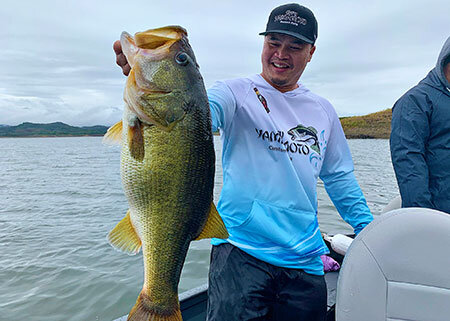

“I’m actually targeting little rock piles, wood, little changes where I think a fish might be and I’ll make multiple casts to that area to entice the fish to bite,” Au said. “If the water is dirty, I’ll go with a lighter weight because I want a slower fall. If I’m fishing fast, I like to go with a heavier weight. If you throw into the right area repeatedly, you can get these fish to react.”
“Depending on what size fish I’m targeting, I might go with the 6-inch Senko. Don’t let that bait’s size intimidate you; remember, on a post-front day, the fish aren’t feeding often and sometimes, that 6-inch Senko will actually trigger them. Also, you can fish it a lot deeper because it sinks faster.”
Au does his Senko work with a Dobyns 703 Champion Extreme spinning outfit with 12-pound braid to 8-pound fluorocarbon. Here, and with is Texas rig, Au finds that patience is his biggest post-front asset.
“You can go down the bank and try to force feed these fish, but it’s going to be very hard to put together a limit by the end of the day,” Au said. “That’s why flipping can be so effective on a post-front day. These fish like to hunker down next to some sort of cover or structure. Flipping allows you to bounce the weight on top of their heads.
“Sometimes, you will find that magical tree on a post-front day where there are multiple fish. You cover enough water, you might run into an area where you can turn a very tough day into a very good day.”

The Autumnal Equinox — one of two days when the sun is directly over the equator (also spring’s Vernal Equinox) — divides night and day into virtually even lengths. It’s a time of balance, but the weeks surrounding this seasonal transition from summer to fall can be more of a disjointed frustration fest.