

By M. L. Anderson

Jerry Weston works in the boat department of the Mesa, Arizona Bass Pro Shop and he sees a lot of boats that are in need of help. Many things that go wrong with a boat can be avoided very easily, but for some reason a lot of fishermen neglect simple routine maintenance and end up with major problems. Those big bass boats are a huge investment and should be worth a little time and money for upkeep whether you plan to sell the boat later or keep it until it falls apart. If you’re planning to sell it, you’ll get top price if the boat is in great shape. If you plan to keep it, it will serve you well for a lot longer and look fantastic if you take care of it. Here are ten ways that you might be ruining your $70,000 investment.
Number 10: You’re not protecting it from the sun. The sun can destroy your boat’s seats and carpet over time. Even if you store your boat in a garage or under cover, it is still out in the sun while under tow and while you’re using it. If you don’t have a garage or a covered area where you can store your boat, get a cover for it and keep it covered. You can get a cover for the motor as well, and don’t forget the trailer tires – the sun eats rubber, too.
Clean your seats and tires regularly and use a UV protector product such as 303, Armor All, Lucas Oil Fast and Easy Tire and Trim Shine, or Meguiar’s Extreme Marine Vinyl and Rubber Protectant. After you clean the seats and any other vinyl or rubber parts, spray on the protectant and simply wipe it down. With most of these protectants you should avoid getting it on clear plastic, but using it on your vinyl and rubber will not only make them look great, it will help prevent the sun from frying them. Don’t forget the rub rails.
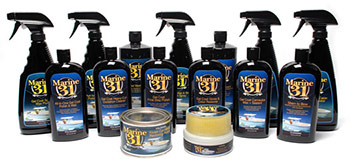
Number 9: You’re not waxing it twice a year. Waxing your boat does more than just make it look good – a good wax will actually make a barrier to keep all kinds of stuff from really sticking to the boat. Gel coat looks smooth, but it actually has a lot of very small nooks and crannies. Over time, oxidation causes the gel coat to look chalky. Wax will help prevent this by filling in the tiny spaces and protecting the boat from oxidation. A good wax will also protect your boat from UV rays and make it easier to clean up when you get off the water because stuff will slide right off a good wax job.
There are many different types of waxes out there. Some you can simply spray and wipe, while others are meant to be applied and then buffed. Marine 31 makes a variety of different kinds of waxes and protectants, including one called Marine 31 Captain’s Boat Coating that will actually protect for years instead of months. If you have put this off for too long and your boat is already looking chalky or stained, you’ll have to use stain removers or polishing compound. You might want to visit your local boat dealer for advice.
Number 8: You’re not paying attention to noises and vibration. Boats bounce around, especially in rough water, but if you drive a boat a lot, you’ll probably notice right away if something isn’t normal. Maybe it’s vibrating a bit unusually or you can hear a different sound coming from the motor. Most guys will glance back and see that the tell-tale is putting out water and assume that everything is okay. But any unusual noises or vibrations should be checked out as soon as possible. It could be a chipped or broken prop blade or a mechanical malfunction, or any of several things. Either way, you should check it out before it gets worse.
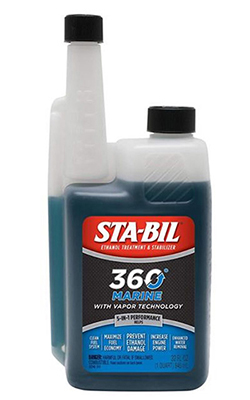
Number 7: You’re running old gas. If you let gas sit in the tank for too long, especially without stabilizer, the gas can go bad by losing octane and separating from the additives. It can seriously gum up your fuel system. E10 fuel actually absorbs some water, which can be a good thing unless it saturates and a layer of water and ethanol starts to form on the bottom of the tank, while the gasoline in the layer above will have lower octane and no ethanol. There really is no practical way to stabilize E10 fuel for long periods of time.
If the gas in your boat’s tank has sat for too long, your best bet is to get rid of it. After refueling, use a good stabilizer like Sta-bil or StarTron that is formulated for E10 gas and check your fuel filters and tanks now and then for gunk and water. You should add stabilizer to your tank every time you re-fuel.
Number 6: You’re not replacing (or at the very least, checking) your impellers every year or 100 hours. Jerry says you should replace your impellers regularly. Even if the motor appears to be “peeing” just fine, you’re asking for trouble if you think impellers last forever, he says. The impeller is a disk with blades that circulate water through your motor. If it breaks, the engine will overheat. It’s a lot cheaper to replace the impeller than it is to replace the motor, so just do it.
Number 5: You’re not winterizing it for storage. I could write an entire article on how to winterize your boat, but the least you should do is get the motor ready for long-time storage. If you are using E10 fuel, which almost all of us are, fill the tank completely, add the proper amount of stabilizer, then run the motor for ten minutes or so to get the fuel all through the system. Then top off the tank so less air can be in there. Air can hold water.
If you can’t keep your boat in a garage, cover it for the winter and make sure the cover can breathe so you don’t get a bunch of wet air icing up in there. You can get or make a frame that will hold the cover up away from the boat so that air can circulate.
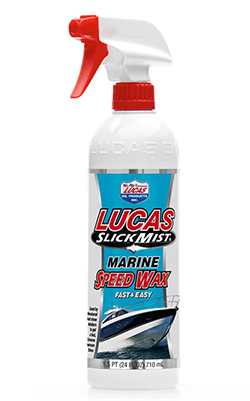
Number 4: You’re not cleaning hard water spots off right away. Water spots can get right into the gel coat on your boat and become permanent if you don’t take care of them right away, especially if you don’t keep your boat waxed. Jerry says that a lot of guys use vinegar or lemon juice, and that works, but it stinks. He likes Lucas Slick Mist. It’s only eight bucks, and it smells like bubblegum, he says. It’s actually a polymer paint gloss intensifier, according to Lucas Oil, and it can be used not only on the hull, but also on glass, chrome, and vinyl decals. All you have to do is spray it on and wipe it off. Jerry says he uses it every time he takes his boat off the water and the hull looks fantastic.
Number 3: You’re not changing the oil. In the old days, motors came full of special “break-in” oil that was meant to carry off any little bits and pieces that broke off during the initial break-in period of the motor. That isn’t the case anymore, but you should still change the oil exactly the way the owner’s manual says to. That may mean an oil change after the first 20 hours, and certainly means changing the oil regularly just like you do in your car. Check your manual. Oil doesn’t just lube your motor, it also helps cool and clean it, so if you let it get old and thin and full of junk, your engine can suffer. Jerry says he recommends changing your lower unit oil every year or 100 hours.
Number 2: You’re not breaking it in. Motor break-in is important. According to Mercury Marine, the first twenty hours of operation will have “dramatic affect relative to overall engine performance and expected engine life”. Doing the proper break-in means less chance of your boat using excessive oil as well. Generally speaking, the break-in period isn’t that big of a deal. Even so, Jerry says he knows a lot of guys who just drop the boat in the water, give it full throttle right away, and just run the heck out of it. Weston says you ignore the break-in period at your own risk. If something goes wrong, the minute they put the computer on your engine they will know if you have committed the sin of omission. Then, he says, it’s at the company’s discretion whether they honor the warranty or not.
Honestly, the break-in is not that difficult or oppressive. With most engines, it’s simply a matter of not operating at a continuous speed for too long at a time, not going over ¾ throttle for the first ten or so hours, and letting the engine reach normal operating temps before going full throttle. Also, don’t hammer it from idle. You should follow the break-in procedure exactly for your engine. Read the manual. It’s not that big a deal, so just do it.
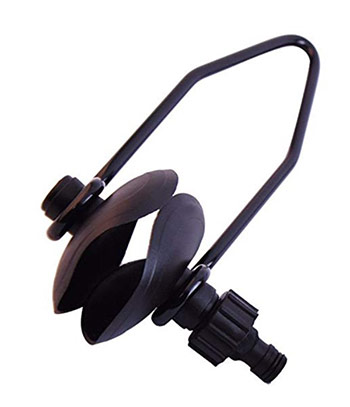
And finally, the Number 1 way you’re ruining your boat: You’re not using it. Weston says he is blown away by the number of people who will spend upwards of sixty thousand dollars on a boat and then just let it sit in the garage. This is really bad for it. He says if you can’t take it out and run it, then spend ten bucks on a set of ear muffs and run if for ten minutes a couple times a month. It’s like a car – if you don’t use it, it’s going to break down. Some engines have an attachment where you can attach a garden hose to the motor so you can run it safely. No matter what, don’t run the engine without earmuffs or the hose.
A bass boat can be a huge investment, so take care of it and you’ll get years and years of enjoyment out of it.


Jerry Weston works in the boat department of the Mesa, Arizona Bass Pro Shop and he sees a lot of boats that are in need of help. Many things that go wrong with a boat can be avoided very easily, but for some reason a lot of fishermen neglect simple routine maintenance and end up with major problems