
By TJ Maglio
One of the things the fishing industry has seemingly turned on its head is the old saying that, “if it ain’t broke, don’t fix it.” For years and years, as much of the tackle and boating industry advanced; tried and true technologies like boats, two-stroke outboards, sonar technology, and even trolling motors were still made very much the same way. Sure, their capabilities had slowly gotten better over time, but the underlying tech was pretty similar to what anglers were using at the turn of the twenty-first century.
In the last few years though, the industry has seemingly jumped forward – as four stroke technologies, real-time beam steering sonar, and all new brushless trolling motor tech has finally brought a little Silicon Valley to the fishing industry.
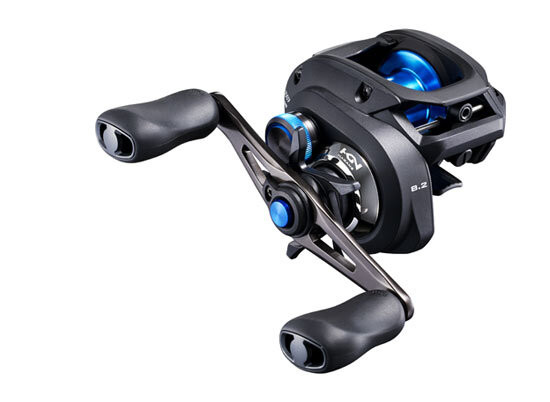
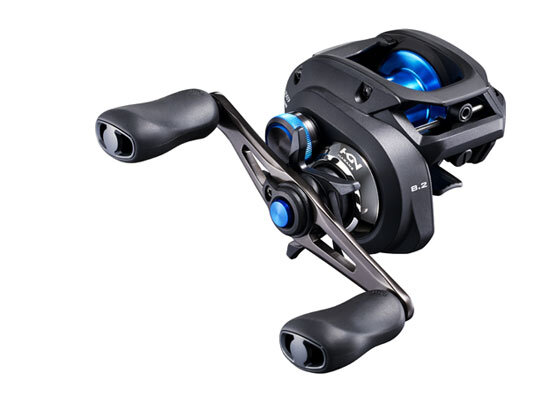
This year, Shimano has continued that technology revolution with the release of two models featuring their refined “Digital Control” technology; the Curado DC and SLX DC.
Not the same old “DC”
Long-time Shimano users and fans of high-end Japanese reels may recall that this is not Shimano’s first foray into digital technology, as they previously released both the Calcutta DC (2004) and the Calais DC (2006). Although these early digital offerings were both extremely well reviewed, they also came with an extremely non angler-friendly price point: $500 for the Calcutta, and $650 for the Calais.
Combine the steep price point with the performance of an early iteration of the technology, and outside of some die-hard (and wealthy) fans, they didn’t exactly move the needle.
A lot has happened in the tech industry in the 15 years since Shimano released the first DC reel, and similar to other tech like the IPhone, we’ve come a long way. The Digital Control element found in the new Curado and SLX is similar to the one found in the Calais and Calcutta, but like the first gen IPhone – the new stuff is way better.
How it works
Prior to this technology, there are two industry standards for spool braking – centrifugal and magnetic. In a centrifugal braking system, as the spool spins centrifugal force shifts brakes outward which apply braking to the spool. Magnetic brakes work similarly, as a dial controls the distance between a magnet and the spool. The closer the magnet to the spool, the more braking force is applied.
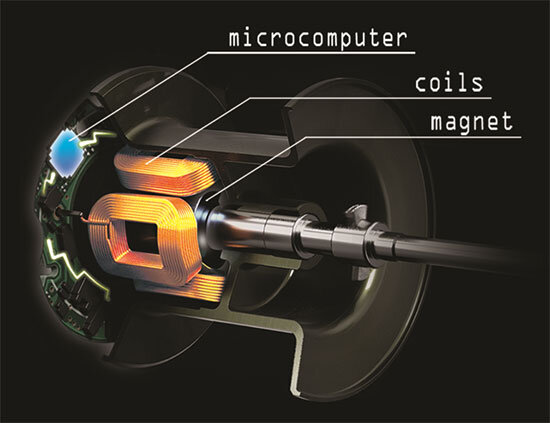
With Shimano’s DC technology, when you cast the natural rotational momentum of the spool generates a small amount of electricity which powers a microchip. This chip collects spool speed data 1000 times per second, and combines with a control algorithm to apply or release a patented digitally controlled electromagnetic braking system.
The chip is pre-programmed with 4 “braking programs” to maximize both effectiveness, and user friendliness. The program, combined with the real-time feedback is what sets this version of DC technology apart from both prior versions, and all other traditional braking systems.
Tuning it up
In addition to price point, one of the other factors that limited the original DC reels appeal was the complexity and time it took to get it set up perfectly. Shimano engineers specifically designed the new Curado and SLX for ease of operation along with performance.
There are only four brake settings, and each reel comes with an easy to read breakdown of when to use each. Here are their recommended uses for each setting:
Setting one is the least aggressive braking profile, designed as little more than an advanced free-spool. This should be used by advanced anglers, and for baits that don’t typically backlash like lipless cranks, spooks, and spoons.
Setting two is for the lighter lines, specifically braid and nylon monofilament with all baits and presentations.
Setting three is for heavier lines, specifically fluorocarbon; and can be used with all baits and presentations.
Setting four is the most aggressive braking profile, designed for skipping docks, casting into heavy wind, and for use by anglers with minimal baitcaster experience.
The first “no-backlash” baitcaster?
If you google the early results, it sure seems like Shimano has done their homework, as YouTube is chock full of videos showing how difficult it is to backlash a properly tuned version of the new DC reels. The fact that they’ve been able to bring this technology to market at an angler-friendly under $200 price point is also of note.
Shimano definitely isn’t claiming that you can’t backlash the new DC reels – but from the videos out there, it certainly looks effective at reducing the dreaded bird’s nest.
As far as angler applications go, the new DC reels are designed to be every-day workhorses suitable for all applications, but one can imagine they would excel at throwing backlash prone baits like deep-diving cranks, spinnerbaits, and skipping around docks and shallow cover.

Brent Ehrler admits that his smallmouth experience has been limited to the summertime events he has fished during his years of professional bass tournaments. However, the California standout feels confident that he has these wily brown fish pretty well dialed in.