
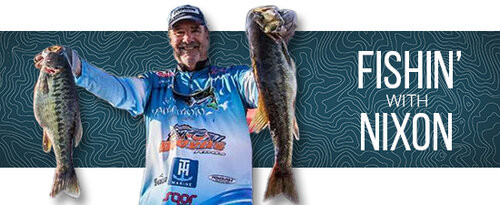
By Larry Nixon
It’s certainly no secret that I’ve been a worm fisherman for a long time. That’s been one of my favorite ways to catch ’em ever since I was a kid guiding down at Toledo Bend. Since then, I’ve caught bass on just about every type of worm there is, rigged every way you can imagine.
The very first worm that I really ever saw was called a Gilmore Worm. It had a lead head with a single hook and a big old weedguard on it. It was 7 or 8 inches long, flat on one side and rounded on the other, but it worked. I can still remember picking that worm up for the first time, tying it on and chunking it up beside a bridge pier. It didn’t sink 10 feet and a bass got it. That was my very first bass on a plastic worm.
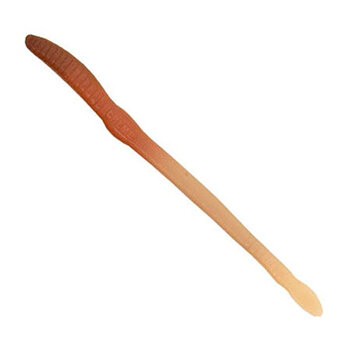
In the first part of my tournament-fishing career, my No. 1 worm at that period of time was the Crème Scoundrel. It was a 5 1/2- or 6-inch straight-tail worm, and because it was so stiff and hard, it had no action. Back then we fished it on a jighead with the hook exposed because we didn’t know how to fish it weedless like a shaky head.
What we were throwing back then was really like the precursor to the Ned rig. In fact, I’d say we got real close to ol’ Ned because we didn’t have much money back in those days, and we’d bite that worm down until it was only about 4 inches so we could keep using it.
We called that combination a jighead-worm, and let me tell you, that thing was a destroyer. I’m gonna say it was about 1973 or ’74 when our fishing guides started fishing it, and I actually won an old U.S. Bass tournament with a jighead-worm on Sam Rayburn in ’80 or ’81, way before it ever got popular on the tournament trail. Me and Tommy Martin went over there and couldn’t get a bite. So I picked up a jighead-worm and started popping it out of the grass and started catching fish.
Then eventually we got the Texas rig. I don’t remember what year the Texas rig was invented and became known, but it was probably about in the days that Rayburn got popular. Once we got the Texas rig, then that was the way to go. It took a while for us to figure out that if you had a tough day and couldn’t get bit on a Texas rig, you had to pick up a little worm on a jighead just to get a bite.
Eventually, Fred “Taco” Bland designed a jighead that you could turn around and make it weedless, and that became the shaky head. I wanna say that was in the mid-90s, right before FLW came along, and that’s the first time I ever saw anybody turn the hook around.
Worms have changed a lot over the years, too. There was a point in my career when I was throwing Gator Tails and ribbon-tails a lot, and those caught me a bunch of fish, but through all the years, the No. 1 fish-catcher was and still is the straight-tail worm. We used the old Crème Scoundrel, then went to a thinner, longer worm to get you a little more length and a little more action. Then … woah baby, here come the ol’ Yamamoto Senko. And I mean it changed everything.
It’s still a straight-tail stick worm, but with a larger, fatter body, which I think is just right. And it’s soft. With the salt and the way it sinks and the action it has while falling, oh my, it just changed the whole game.
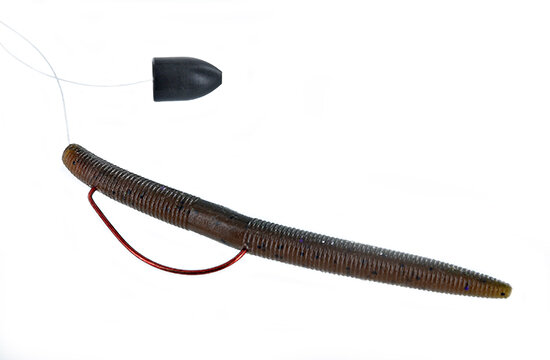
The Senko is so good because, unlike those other worms, it’s so versatile. All those methods we used to use to fish all those old worms, you can do them all with a Senko. You can peg it to a 5/16-ounce weight and Texas rig it for flipping and pitching. You can cast it on a 3/16-ounce weight. You can catch fish on a Senko rigged wacky style anywhere in the world.
Another thing, and this isn’t something I’ve talked a lot about, but, buddy, when they get on the bottom in late May and into June, you can Carolina rig a Senko and wear their butts out. You put a 4/0 or 3/0 offset-bend hook in a Senko and put a heavy weight up the line. Oh boy, with that combination, you’ve got a weightless Senko you can fish on the bottom. It really works well when you’ve got a hard bottom or shells or something like that.
I’ll tell you another thing, I’ve been catching fish on a Senko with a football head since probably the very first time FLW went to Lake Hartwell in 2011. I’d never tried it before then, and some guy gave me some screw-lock football heads. Man, that jighead was cool. I screwed the Senko on there and immediately started whacking them big ol’ spots.
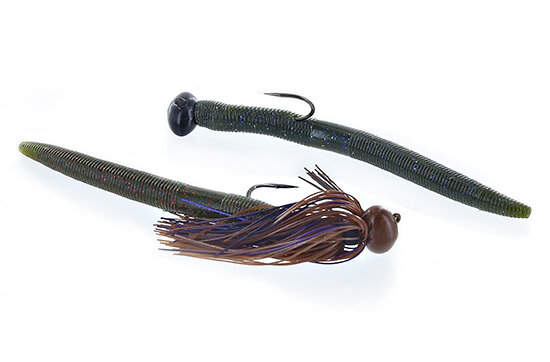
Another thing that makes the Senko so versatile is that it comes in a bunch of sizes. I’d say my best Senko is the 5-inch. If I’m going down south to Rayburn, Chickamauga, Falcon or any of them lakes that’ve got great big suckers in it, then I’m going to have my 6- and 7-inch Senkos. A 6-inch Senko is a really good size in Florida, too.
I also throw a 4 a lot. It’s excellent as a drop-shot bait. I hook it in the center wacky style and drop straight to those fish that you can see on electronics. Another trick I like is to take a quarter inch off the 3-inch Fat Senko to make me a little stubby Ned rig. I tried keeping that a secret for a long time, and so did a lot of other people, but the word is definitely out now.
Choosing the right size Senko is just like anything in fishing: When the fish get tough to catch, maybe because of pressure or because it’s postspawn and they’re a little more picky, that’s when I go down to a smaller bait.
You can change up the thickness, too. That 6.75-inch Pro Senko is mine. I worked with Yamamoto to design that bait about seven years ago because I thought we needed a longer, skinnier Senko for getting real finessey in clear water. You get a lot more action out of it, a lot more body shake, which makes it an awesome shaky head worm. There are also times on a lot of lakes when you can’t hardly get a bite. That’s when you pick up a split-shot rig or a little mojo rig with a 10- or 12-inch leader and that Pro Senko. I’ll even drop-shot the Pro Senko quite a bit.
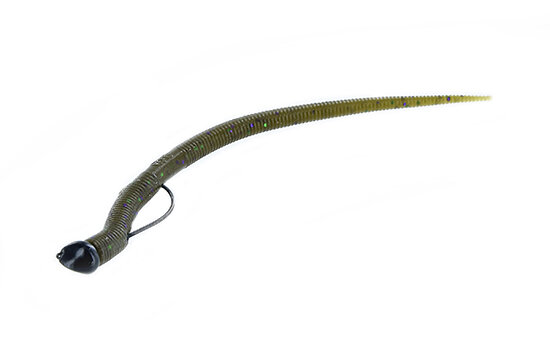
I’m not saying there’s not a time for a ribbon-tail worm, but it’s a different presentation. I swim a ribbon-tail. I usually fish a straight-tail with a little bit of hop to it. So I’m hopping it off the bottom a foot or two and letting it do its thing going back to the bottom.
A straight-tail worm doesn’t have a rudder like a swimming worm, so it doesn’t fall in a straight line. You just never know where that thing is going to go. It’s more of an erratic fall, which is why the straight-tail style has been so good over the years.
In this old worm fisherman’s opinion, there’s hardly a time or place in the country where a bass can’t be caught on a worm. That’s never changed. You really can’t find much of anything better when you just need to get a bite. The only thing that has changed is that the worm on the end of my line is a Senko. That part has gotten a whole lot better.