
By Bernie Schultz
Located just outside of Detroit, Michigan, Lake St. Clair is part of the Great Lakes flowage system. Although much smaller than neighboring lakes, Huron and Erie, it has more bass per acre than the other two combined.
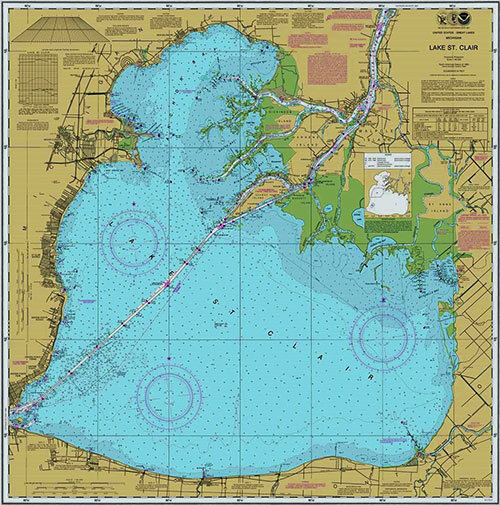
Lake St. Clair offers 275,000 surface acres of great bass fishing --- shallow and deep.
Many consider Lake St. Clair to be the best smallmouth fishery in the country — not just for numbers, but size as well. Four pounders are common there.
This event represented the final stop in the Northern Swing of the Bassmaster Elite Series — I wanted to make sure I secured another solid finish. After two strong events in New York, I had made up considerable ground in the point standings and St. Clair offered yet another chance to advance.
Because of COVID-19, the Canadian government denied us any access to their waters. But as the tournament progressed, it proved to be a nonissue. The entire field found plenty of fish in U.S. waters.
Getting Started
On the first day of practice, I accessed the lake on the western side of Anchor Bay. My first stops were to some familiar shallow water flats.
My lure selection consisted of a Rapala Skitter V topwater-walking bait and Shadow Rap jerkbait, Hildebrandt Drum Roller swimbait, 4-inch Yamamoto Senko Ned-rigged and Shad Shape Worm on a 3/8-ounce drop-shot rig.
Starting with the jerkbait and swimbait, I moved quickly over the flats hoping to find some easy fish. Unfortunately, the first stops yielded nothing. The third stop, however, showed promise. It was a shallow bar located just inside a deep weedline with two high spots, and the fish were positioned downstream of the current on both.
Logging those numbers, I spent a few more hours trying to expand on that pattern without success. From there, I ventured into the St. Clair River, testing some shallow bars and seawalls. There again, I found fish, but not in any concentrations. It was one here, one there.
Having calmer conditions on day two of practice, I decided to move out to the main lake. There, I scanned for bare spots adjacent to deep weedbeds.
Relying on my Garmin Panoptix, I discovered two concentrations of quality smallmouth. They were eager to bite, too. All of them fell for the Shad Shape Worm on a drop-shot rig. I knew I had the right area, if only the wind would allow me to fish there during the actual competition.
On day three, I tried some docks and seawalls along the western side of the lake. I caught plenty of largemouth, but only one of the size required. Seeing no potential there, I moved to some offshore humps to the south, hoping they might hold the motherlode.
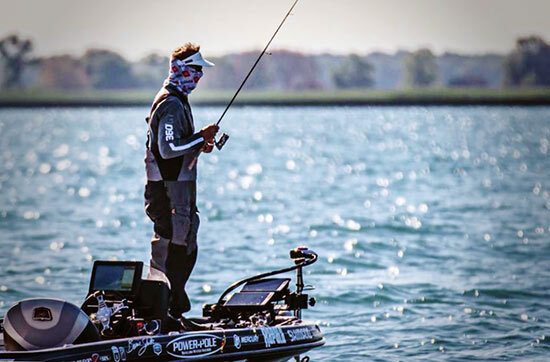
I started in the shallows early, then moved deeper as the sun got high. - photo by Shane Durrance
The remainder of the day proved nonproductive, however. At that point I knew my game plan would center on a shallow morning bite, then transition offshore …weather permitting.
Competition Time
The first morning of competition, I exited the take-off canal at Metro Park and raced directly to a shallow bar across the lake. In minutes, I had three smallmouth in the livewell, but only one that would make it to the scales.
From there, I hit several other shallow flats — eventually filling out a decent limit. Knowing I needed more, I was forced to make a decision. The weather forecast called for stiff winds and high seas. Rather than fight that, I opted to fish the protected waters inside the St. Clair River — a decision I would later regret.
Moving from bar to bar, seawall to seawall, I caught decent-sized smallmouth throughout the remainder of the day, but none that really improved my weight. Back at the scales, I registered a meager 15 pounds, 8 ounces. I was outside the cut by nearly three pounds. In a smallmouth tournament, that much of a deficit is usually insurmountable.
Day two of the competition called for light winds. Seeing that, I decided to start shallow then move to the main lake as quickly as possible. It proved to be the perfect strategy.
By 9am, I had a solid 18-pound limit of smallmouths in the boat. With that, I moved to my deep-water spots and, with the help of the Shad Shape Worm, I culled to 21 pounds. This put me narrowly inside the cut for the weekend.
Ecstatic, I retreated to the motel and prepared my gear for the next day.
Fishing on the Weekend
Focused on advancing my position in the points race, I left Metro Park full of confidence. I knew I had the fish to move up the leader board … it was just a matter of getting them in the boat.
At my first stop, I caught several 2- to 3-pounders. Not at all what I was hoping for. The next stop showed a bit more promise, but then things began to fall apart.
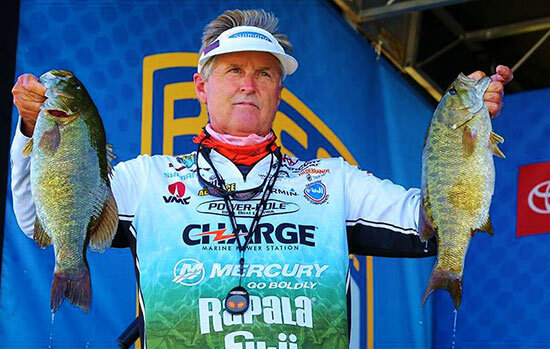
This pair anchored a 21-pound stringer, which saved my tournament.
On one particular cast with the Skitter V, a huge smallmouth crashed the lure. After numerous jumps, I was attempting to guide the fish boatside when, suddenly, it came unpinned. In that same instance, two 3 ½-pounders latched onto the lure and a whole new battle began. By the time I got them to the surface, one pulled free. Frantically, I lifted the remaining fish into the boat.
In a single cast, I had hooked more than 10 pounds of smallmouth — only to boat the smallest. Shortly after, I managed to lose two more in the 4-pound class. I was beside myself. Why was this happening, I wondered?
Disgusted, I pulled the trolling motor and headed offshore. I needed a change of scenery and I was hoping a change of luck would come with it.
Finally, at my deep spot, I began scanning with the Panoptix. In no time, I spotted the right fish. They weren’t nearly as aggressive, but over the next few hours I put together a solid limit of smallmouth weighing 19 pounds.
Knowing what could have been, it was somewhat of a disappointment. But even with all the missed fish, I still managed to move up the leader board and improve my position in the AOY point standings.
The tour is heading south next, so stay tuned.