SWIMMING A GRUB
Catching bass during the cold water period can certainly prove to be quite a challenge. Still there are plenty of tried and true tactics that come into play this time of year. Ned rigs, swimbaits, jigs, suspending jerkbaits and drop shots to name just a few all have their time and place when it comes to cold water fishing. You can be sure that these baits have a place in my boat, but in addition to these staples, I have a well stocked 3700 storage box devoted solely to my favorite under the radar winter time bait, the Yamamoto Single Tail Grub.
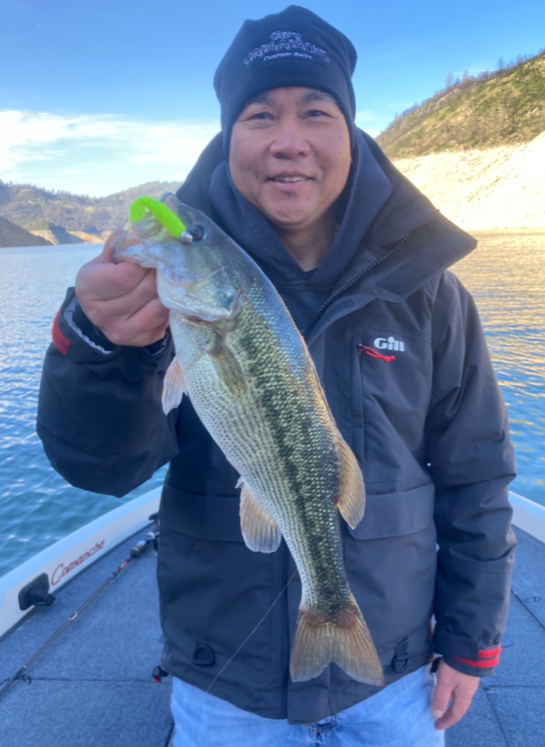
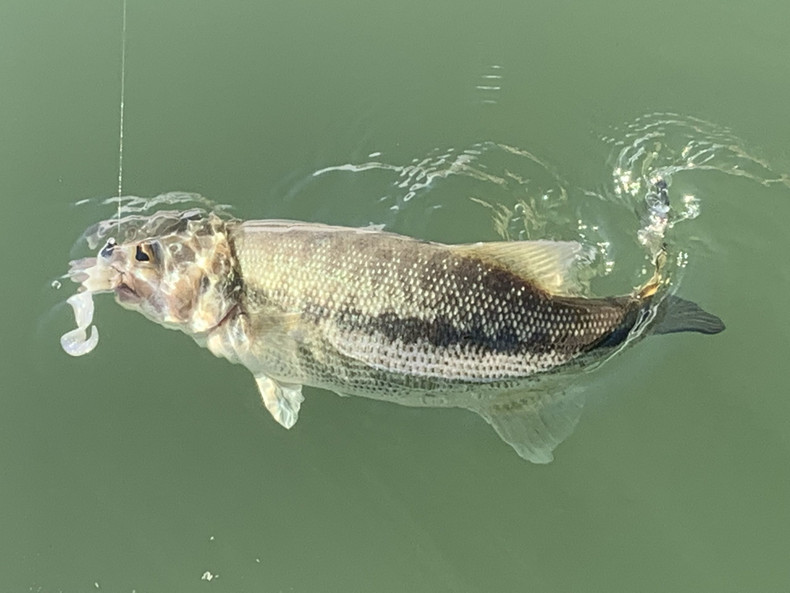
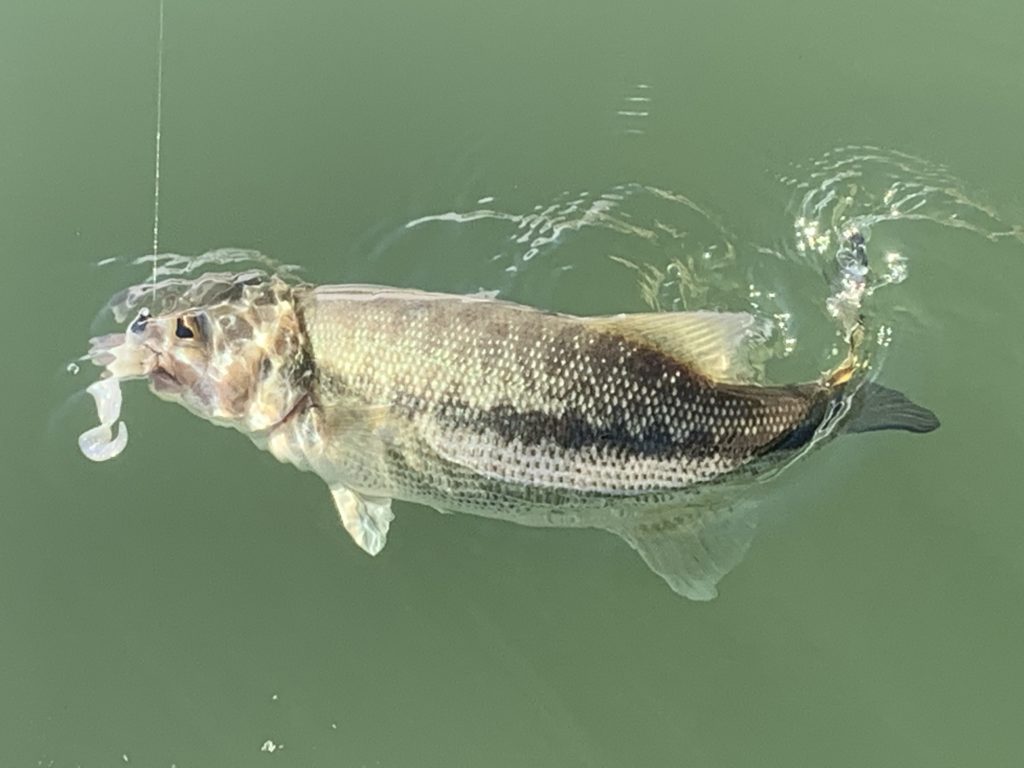
Swimming a grub is a light line finesse technique that excels when the water is cold and clear. History has shown that grubs are proven year around fish catchers, but for me the grub really shines when the water temperatures are at their lowest of the year. The compact profile of a Yamamoto Single Tail Grub and the subtle vibration generated by its swimming tail does a great job of mimicking the shape and movement of a lethargic bait fish. Not only does it catch numbers of fish, it catches big ones as well and while it accounts for its share of largemouths, it excels on spotted bass and smallies.
Swimming a grub on a lead head jig is not a difficult technique to learn but does require some practice to master. While the grub is recognized for its simplicity of shape and function, maintaining the proper attention to the small nuances of the bait will greatly improve your odds for success.
THINK VERTICAL
In frigid water, bass simply don't want to expend much effort, even to feed. It's all about energy conservation and efficiency. With this in mind, I like to concentrate my efforts on vertical structure near deep water where the fish don't have to travel a long horizontal distance to move from deep to shallow water. This also makes it easier to locate the fish as there can be far less unproductive water to cover. Steep banks, bluff walls, rip rap, bridge pilings and long sloping points with a vertical drop nearby are great high percentage areas to try.
SWIM IT
I will use my electronics to determine if the fish are on the bottom or suspended. Once I find the activity zone, it can be as simple as just getting the grub in front of the fish. If the bass are relating to the bottom, I'll start by making a long cast, letting the bait fall to the bottom on a controlled slack. It's important to pay attention to your line as bites can occur on the initial drop. Once the grub reaches the bottom I'll begin to slowly retrieve it back to the boat. The colder the water the slower the retrieve, so finding the right cadence is critical. Sometimes the fish want the grub swimming just above the bottom at other times maintaining bottom contact can be the key.
If the bass are suspended in the water column, I'll again make a long casts and let the grub pendulum back to the boat on a tight line all the while counting the bait down to the zone I am targeting. The first bite is always an important clue, it validates that I have found the right combination of retrieve speed and depth and gives me a strong starting point to refine my pattern.
Bites are typically subtle. The strike can feel like a loss of connection with the bait, or a slight tick or even just a sense of pressure. Regardless, of how they bite, I have found that reel setting works far better than a forceful snap the tip hookset. Simply speed up your reeling until you feel the weight of the fish and gently sweep the rod.
GRUB DEETS
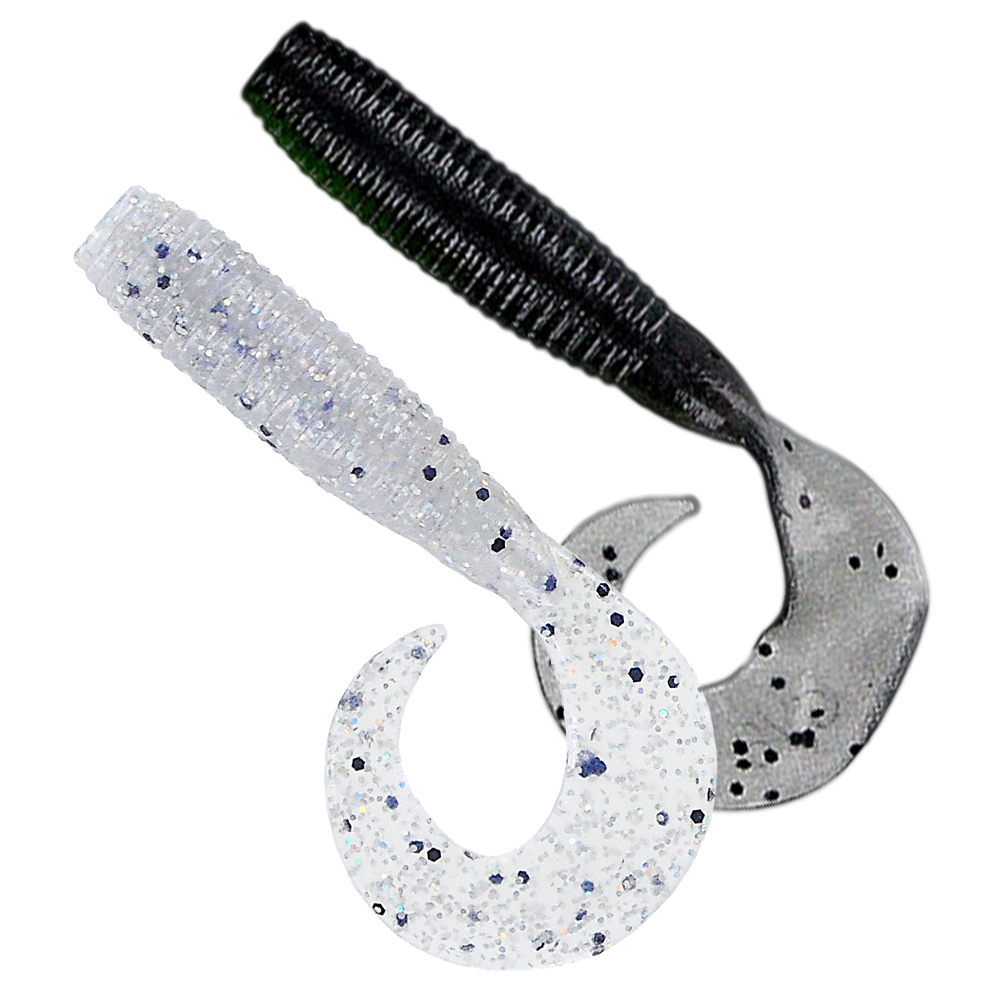
My favorite grub is the Yamamoto Single Tail Grub and it is available in two sizes, a 4” (40 Series) and a 5” (18 Series). Most of the time I will start off with a 5” grub, but if the bait is really small or the if the bite is super tough then I won't hesitate to down size to the 4” size.
Staying true to my Western roots I favor a dart head jig. I am really particular about my jig heads so much so that I have them custom poured with a light wire 3/0 Gamakatsu hook. Most of the time I will start out with a 3/16 oz head but if it is windy or if the fish are deeper than 20 feet I will upsize to a 5/16 oz. I realize that my choice of jig heads may seem to be a little on the light size, but using the lightest weight I can get away with really forces me to slow down my presentation and I believe this get me more bites, especially when the fish are negative.
My color choices are really pretty simple. Whether it is pond smelt at Oroville or shad at Berryessa my go to color is 031 (Blue Pearl w/ Silver Flake). If I am not getting bit or if the fish are finicky and not eating the bait well, I will switch between 150 (Smoke w/ Black Flake) and 177 (Smoke w/ Black and Silver Flake) to see if I can dial in the color. For reasons that I don't fully understand 156 (Chartreuse with Black Flake) is a wildcard color that just catches a lot of fish. A friend of mine who fishes Shasta a lot introduced me to this color.
The most important aspect to rigging a grub is to make sure that the hook is inline with the body of the grub. This is easy to do if you follow the seam on the body of the grub. While I know there are two schools of thought regarding whether the tail should be rigged facing up or down, from what I have seen I don't believe there is a wrong way. For the record, I prefer to rig my grub with the tail facing down.
GEARING UP
Like other light line finesse applications, spinning tackle is the name of the game. To fish a grub correctly requires selecting the proper rod and reel combo. I like to use a 7'6” medium light action spinning rod with a light fast action tip and plenty of back bone. Using a longer rod enables me to make longer casts and to move more line on the hookset. For similar reasons, I like a 3000 size spinning reel for its ability to reduce line twist, make longer casts and to pick up more line on the retrieve.
I'll spool up with a 10lb braid mainline to which I will affix a top shot 5lb fluorocarbon leader via an Alberto Knot. I feel that I get more bites by using lighter line and this line combination casts a grub great distances.
Perhaps you have never fished a grub or maybe you just haven't in awhile, so the next time you find yourself trying to solve the puzzle that is the cold water bass bite, try swimming a grub. I bet you'll be glad you did.