
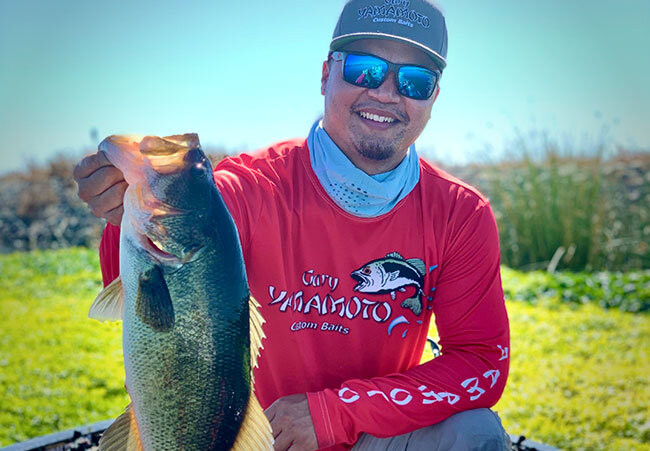
By M.L. Anderson
Early spring can be a difficult time for bass fishermen. Depending on what part of the country you are in, it might still feel very much like winter or you could be heading into pre-spawn. Yamamoto pros fish tournaments all over the country, so they need to be able to find fish any time, any place. Here are some tips from a few of them.
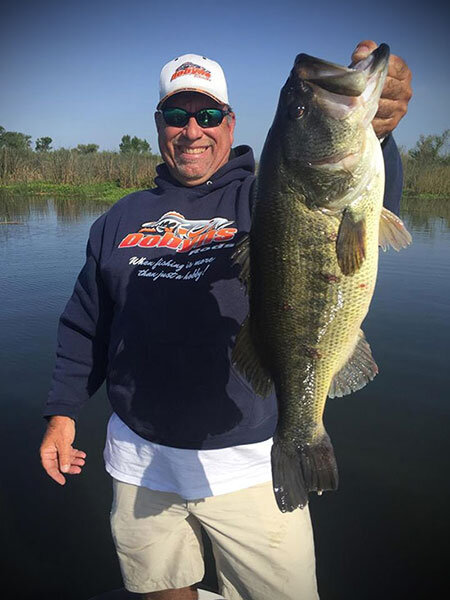
GARY DOBYNS
Dobyns is known as a power fisherman, so the first thing he does is pick up a fast-moving bait and start pounding the bank. Jerkbaits are among his favorites and he can flat cover water with them. He picks color based on the water and the weather. In dark water or low light days he’ll choose a bright color, while sunny days and flat water call for more subtle, natural baits. He fishes with a jerk, jerk, pause cadence, but switches it up now and then.
If Gary is prefishing a heavily pressured lake, he changes tactics. He’ll try to find areas that aren’t getting beat up, such as off-shore structure. He also looks for what he calls “ugly” banks – banks that don’t look as fishy. Another tactic is to fish a bait that isn’t too common, even an oddball bait. Some lakes are so pressured that the fish have seen every bait in the catalog. That being said, Dobyns also says that a Yamamoto Senko is one bait that they never seem to be immune to. One of the greatest things about Senkos, he says, is that you can fish them so many ways. Seems like no matter how you rig them, all you have to do is let them fall in front of a bass and they eat it.
As a last resort, Dobyns will go to finesse fishing, using a drop shot or a ¼-ounce jig on structure rather than a big crank, for example. He also starts looking for fish way deeper. “Most people don’t want to fish deeper than 20 to 30 feet, but on the big reservoirs you can often find a really deep bite.” Again, these are a last resort he says, because they require you to fish so slowly. If you’re looking to win a tournament, you need to try to develop a pattern or find a spot different from everyone else. The smaller the lake, the more difficult this can be.
Another of Dobyns’ go-to techniques when fishing is tough is tube fishing. There are so many ways to fish them, he says, but 99% of the time he fishes them on a dart head with an open hook. Depending on how aggressive the fish are, he’ll use a 1/8, 3/16, or ¼-ounce dart head. The more aggressive the fish, the heavier you can go. Gary fishes tubes on spinning gear.
Tubes are good for suspended fish. If he sees bass suspended, he’ll count a tube down and swim it back, bouncing the rod a bit. He says they eat it really well so you get good hooksets. He also does the same exact thing with a 4- or 5-inch Yamamoto Single Tail Grub. With the grub you don’t have to bounce the rod – the tail gives it all the action it needs. He says to think of it as a miniature jig that you can also bounce down a bank.
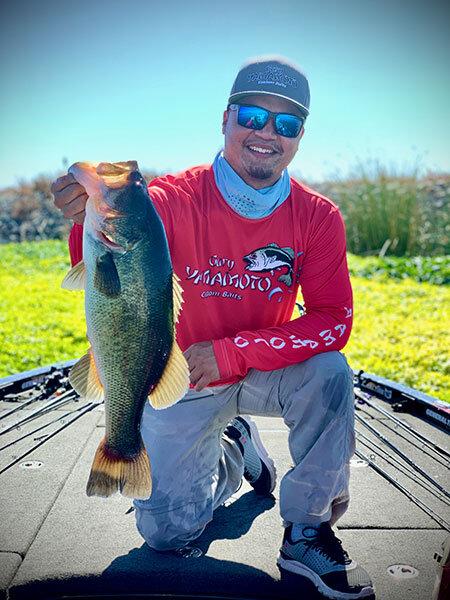
TAI AU
Tai Au of Arizona is another power fisherman like Dobyns. If he can, he prefers to cover water and look for aggressive bites. One of the rigs he keeps tied on this time of year is the A-Rig. On a high-pressure day (blue sky, rising barometer) he can throw it deep and work it slowly, but you have to have the patience to let it sink. Tai isn’t particularly patient, so he says he’d actually rather use a spoon if he has to let something sink. However, the A-Rig can be very effective for big fish so he’ll often switch to it. He looks for underwater points – ambush points. On a windy, cloudy day you can throw it shallow.
When Tai fishes an A-Rig, he hugs the bank and throws out in front of the boat. His favorite baits for the rig are Yamamoto Zakos in Electric Shad (973). He says he’s caught a ton of fish on them, and they have such a great action on their own that they practically fish themselves. Another good bait for the rig, he says, is the Yamamoto Heart-Tail in shad colors and whites. Because of Arizona law, Tai fishes a G-Funk Desert Rig, which has two longer arms on the bottom with hooks, and three teasers. Two 3/8-ounce weights is as heavy as he ever goes, and he uses ¼-ounce weights if he’s fishing shallow. He throws the rig on 16-pount-test Sugoi line with a fairly fast reel and an 8-foot Dobyns rod (806 Champion CB), which allows him to throw the rig way out.
Tai also loves the Yamamoto Cowboy this time of year, especially for punching through grass mats. He rigs the Cowboy on a 1-1/4 ounce head and lets it fall like a Senko – there’s a lot of action in that tail, he says. Control the fall – the tail lets the fish track it in the grass. He flips it or fishes it like a jig, and says it has incredible swimming action. He also punches it through floating wood on 20-pound-test fluorocarbon Sugoi.
Tai says he has learned to let the bait fall slowly, and he also uses it to pitch to trees and drag across points on a football head or a Carolina rig. These baits are durable and the big tail makes them tournament winners, Tai says. In fact, the first time he ever used them he caught his personal best bag at Saguaro Lake.
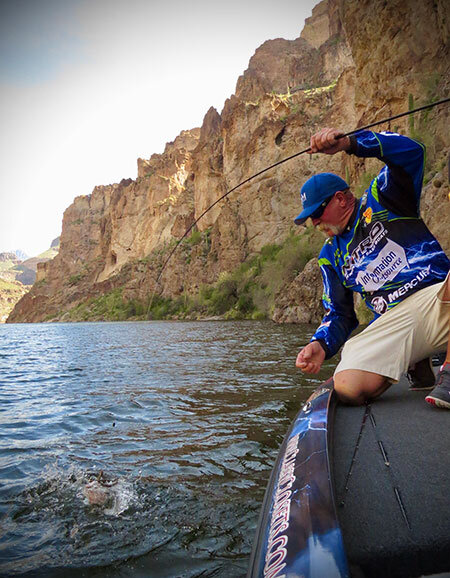
MARTY LAWRENCE
Marty Lawrence’s advice on prespawn fishing is “don’t overthink it”. That being said, he’ll probably have 14 rods on the deck by the end of the day, and several of them will have a Senko tied on. He’ll throw the Senko Texas-rigged, wacky rigged with no weight, or wacky rigged with a nail weight for deeper cover. As for the Texas rigs, he’ll have one with weight pegged or with a bobber stopper, and one unpegged. The Texas rigs are for around trees and other vertical structure, and the wacky rigs are for dropping to submerged cover.
Marty will also try a crankbait or jerkbait sometime during the day at varying depths, and he’s also a big fan of a Chatterbait with a Zako trailer. When he starts out in the morning he’ll have three or four different baits in different sizes and colors on the deck. He says when the water temperature gets close to 60 degrees, it’s time – pre-spawn really starts kicking into gear and it’s time to cover water, making sure to probe any rocks and trees you find in a cut.
MY PERSONAL TAKE ON HEAVY JIGS, AKA ONE-TONNERS
When the water is cold and the fishing is tough, a heavy football head jig with a Hula Grub is a killer combination for me. A heavy jig falls fast and kicks up mud and debris like a crawdad, so big bass really pound a one-tonner. The first time I ever caught a bass on one, I brought it all the way to the boat and it wasn’t hooked. It was just hanging on to that delicious Hula Grub, and when it saw me it turned and left. Didn’t even have the decency to look scared!
When fishing a big football jig, one of the best ways is to cast it out, hold the rod down, and watch the line. Most of the time if they take it on the fall the fish will grab it and turn, so you’ll see the line move sideways, but sometimes they’ll suck it in and keep coming at you, so you won’t get anything but a little tick of the line. If the line stays taut as the jig falls, just let line feed out until it goes slack – you can see that the jig has hit the bottom. If you cast out and turn the handle right away, the jig isn’t going to fall when you cast it – it will pendulum quite a bit closer to you and may not hit bottom at all.
When you’re fishing a Yamamoto Hula Grub, it’s hard to beat Yamamoto Football Head jigs because the two rings are a lot easier on the soft baits than those barbs you find on most other jigs. You also need a good long jig rod with plenty of backbone and a fast reel. The reel needs to be fast because once a fish takes your jig, you have to be able to take the slack out of the line and hit him hard. If he’s headed right for you, that means some fast cranking. Good stout line without a lot of stretch is also ideal for the same reason. Those big hooks require power to penetrate a big fish.
The guy who taught me to fish a jig, the late Jerry Loughgran, says he usually starts out fast, bouncing the jig down the bank in spots he’s known from previous catches, running from spot to spot until he’s tried them all. Then he starts all over and this time he fishes the jig a little more slowly. In each spot, cast the jig at least three or four times. If you come to a likely looking tree or rock pile, work the jig through the tree or rocks. When you are dragging a jig over something, keep the line taut and feel the jig. When it starts to fall, push the rod forward to give it some slack so it falls down next to the cover instead of out away from it. Sometimes it’s like deep-water flipping. If you hang up, just get over the jig and pop it loose. It’s a lot faster than re-tying. However, if you’re fishing heavy cover, be sure to check the line often. Better to take the time to re-tie than break off a big fish.
My mentor said that a mistake some people make is to have good fish going during pre-fish in maybe five spots. So they’ll hit the first one on tournament day, catch a couple of fish, then hit the other spots and not catch anything. So they’ll switch tactics and never go back. He says you need to have confidence in your bite. Fish aren’t active all the time, so you need to keep trying. Sometime during the day those fish will turn on and you’ll catch them.
You can use a 1-oz jig as a search bait because you can fish it fast. Put the trolling motor on high, pitch it out, shake it a couple of times, then throw it again. A jig bite feels like the weight of the jig went away a lot of times. You feel it, then you don’t. That’s when to set the hook. Violently. You can also crawl a big jig by lifting it up a bit, then letting it back down. When you get it back to the boat, try moving the boat just a little with the trolling motor. The jig will actually go backwards a little, just like a crawdad. A great trick for when it’s really tough.