
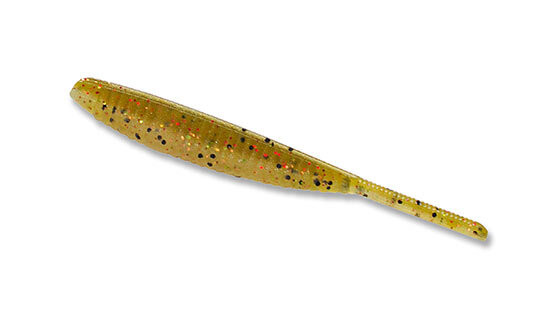
By Jonathan LePera
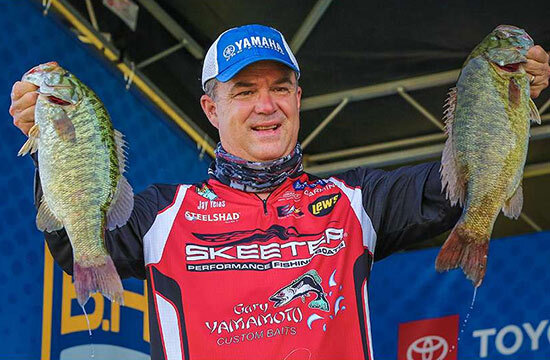
Jay Yelas has staked his claim in professional bass fishing. His list of accomplishments include winning the 2002 Bassmaster Classic, 2002 and 2007 FLW AOY and 2003 Bassmaster AOY Titles and he was recently inducted into the Bass Fishing Hall of Fame in 2020.
Over the years, a variety of Yamamoto products have helped Jay in his quest for angling success. He took the time to unpack his all-time favorite tournament lures for us.
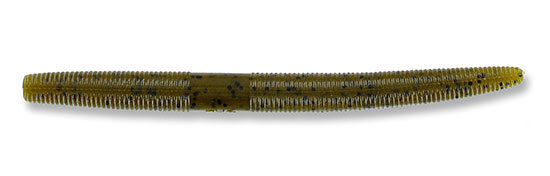
The 6-inch Senko
The 6-inch Yamamoto Senko is the unsung hero and silent assassin in his arsenal when he needs to put kicker fish in the boat.
Fished on 20-pound fluorocarbon, he’s willing to sacrifice a bit of the action of the bait knowing that if he hooks a big fish, it’s coming to the boat. He likes to fish the big Senko in dirty water around grass. If he’s fishing sparse cover and cleaner water, he’ll drop down to 15-pound line.
The 5-inch Senko may be king, but Yelas has used the bigger 6-inch to weigh in big bags, like a 22-5 bag on the first day of the 2019 Toyota Bassmaster Texas Fest as well as a May tournament timed around the spawn when he weighed in a bag that weighed over 24-pounds fishing a green pumpkin (color 297) Senko.
“The fish were up shallow around scattered hydrilla and I’d make a long cast and work it back slowly. The water was dirty and I couldn’t see the fish, but I was fishing around a spawning area. It is a deadly way to fish that bait,” Yelas started. “Sometimes they’d hit is as it fell; the water was 2- to 3-feet deep. Most of the bites happened as I was just inching it along the bottom real slow back to the boat and it was a real soft bite.”
He’s also done well pitching and flipping milfoil with the bait weightless on Lake Champlain for smallmouth. The key for Yelas is always rigging the 6-inch Senko on a 6/0 Gamakatsu Extra Wide Gap Superline Hook.
No need to break the bank on a boatload of colors. “In tournament situations, we don’t have a lot of time to experiment — we only have three days to figure it out. I know they’re probably going to bite green pumpkin, black/blue or green pumpkin/watermelon laminate. Watermelon is great in clear water and I always keep watermelon laminate in the boat,” Yelas said.
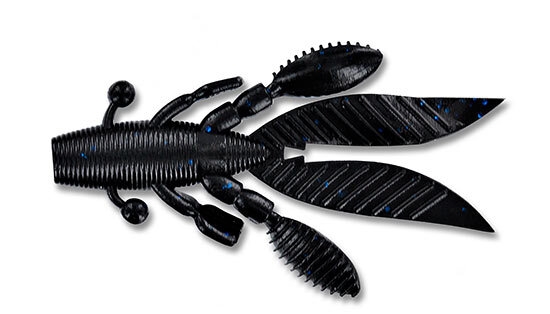
Big ‘Ol Flappin Hog
Either threaded onto a flipping jig or Texas-rigged, Yelas holds a black/blue (021) Large Flappin Hog (FHL) in high regard.
Rigged on a EWG 5/0 hook with a ¼- to 1 ½-oz sinker, he’ll flip and punch matted vegetation. He dislikes a straight shank hook because Yamamoto’s softer plastic is more prone to being torn by the first keeper barb on the hook. He doesn’t rip the appendages off the bait either. If his bait has trouble getting through cover, he’ll just use a heavier weight.
When flipping heavy cover, he fishes it quickly, pulling it out after hopping it twice before putting into the next target. “When you’re flipping it into heavy cover, they grab it as soon as they see it,” Yelas started. “Of course, there are times in Florida and places where they get sulky and you have to dead stick it.”
Around the spawn and when flipping dirty water, fishing slow can pay off but once summer comes around, he’ll fish it pretty quick.
On Southern lakes with matted hydrilla growing in 15-feet of water, they’ll hit it on the fall. Yelas suggests letting the bait hit bottom, then pulling it up to the bottom of the mat and shaking it in place to trigger suspended late summer and fall fish, before pulling it out and flipping again. “Sometimes you can reel it real fast and stop it right below the mat to try to get them to react to it,” Yelas said.
A Lew’s Custom Pro 7.6 Heavy action flipping stick paired with a Lews HyperMag Reel (7:5:11) spooled with 50-pound Strike King Tour Grade Braid or 20-pound fluorocarbon is his weapon of choice.
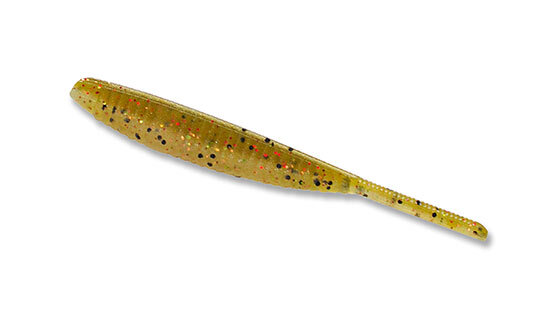
Shade Shape Smallmouth Killer
After a 5th place finish at the Bassmaster Elite event on the St. Lawrence River last summer, the Shad Shape worm further solidified its place in Yelas’ rotation. “I caught 90% of my fish on that bait. When I’m on smallmouth and dropshotting is the deal on any of the northern lakes, green pumpkin is a great choice,” he said.
Jay rigs the Shad Shape Worm on a Gamakatsu 1/0 Aaron Martens Dropshot hook with a ½-ounce Provider Tackle weight, nose hooking the bait and holding it as still as possible.
The heavier weight allows him to cover water more quickly, especially when smallmouth are feeding as they’ll often commit to the bait on the initial drop. For a slower current, he’ll opt for a 3/8-ounce sinker while a ¼-ounce weight gets the nod when targeting water 10-feet of water or less.
On a river system like St. Claire, he’ll target current eddies forming on points or drift flats targeting sand to rock or rock to weed transitions.
Yelas is a “holder”, not a “shaker”. “I don’t over work it. Some guys shake their dropshot rig but I’m not in that camp,” Yelas said. He will gently pick his sinker up off the bottom and put it down to check for the slightest resistance that indicates a bite.
Some anglers prefer a light action rod to prevent unsuspecting bass from feeling any resistance that indicates something isn’t natural, or to keep light hooks from straightening, but Yelas doesn’t agree. Instead, he prefers a 7-foot Lews heavy action spinning rod to ensure that he can drill the hooks into the hard mouth of larger smallmouth and keep them pinned. A Team Lews spinning reel spooled with 15-pound braided line and an 8- to 12-pound fluorocarbon leader is his connection to the bait.
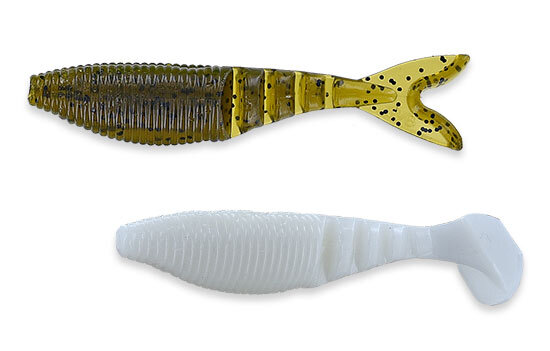
The Zako Swimbait
In what could have been his most awesome smallmouth fishing experience ever, Yelas used the Zako as a trailer on a Z-Man Evergreen Jackhammer to nail a 5th place finish at Lake St. Clair this summer.
Available in a straight and boot tail, each have their place. The Kickin’ Zako swimbait has a boot tail which was instrumental in Yelas’s finish at St. Claire. Paired with a white ¾-ounce chatterbait sporting a silver blade, it provided the necessary thump required for windy and low light conditions. The straight tail excels when bass need to be finessed through the mid-day bite and when it is calm and sunny.
His standard color combinations include a chartreuse/white skirt with a white trailer and a bluegill skirt with a green pumpkin trailer. On its own, black can be a very versatile color.
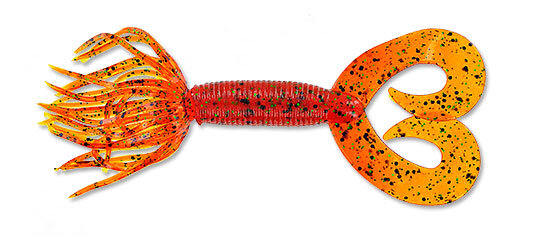
Along Came a Spider
Rounding out Yelas’s top five is a bait he cut his teeth on early in his career while developing the necessary versatility to become a professional angler. It was then that he realized the value of the Yamamoto Double Tail Hula Grubs.
Despite fishing a crankbait primarily during of his early Bassmaster wins, he used the jig to clean up when the reaction bite shut off. He also used the jig rigged on a weedless head around docks to notch a win on Lake of the Ozarks in 1997. The Hula Grub received mention again in 2001 at the Bassmaster Classic, taking big fish of the day honors.
“I grew up fishing out West and have been fishing that bait for over 30-years,” Yelas said. “It’s been a staple in the winter and early spring months on the desert lakes.”
Rigged on a ½- to ¾-ounce football jig, Yelas fishes it as a finesse jig in clear water especially along a silty bottom. “There is something about that heavy head that really stirs the bottom up and gets those bigger fish to bite.” Yelas said.
“Carolina rigs are out of vogue right now, but they were hot in the 1990’s. I still throw it. The Hula Grub is a great C-Rig bait because it has that billowy skirt and the legs move and it sinks slower because it’s bulkier,” Yelas said.
The Hula Grub shines on highland, desert, and clear-water rocky lakes but it will produce on tidewater fisheries and in northern lakes when targeting outside grass lines or deeper rock piles.
Neither largemouth or smallmouth are immune, and the only colors you’ll need are pumpkinseed, green pumpkin and natural bait colors.