
By David A. Brown
Throughout his career as a tournament pro, Cody Meyer has come to the conclusion that, sometimes, fishing can be a real drag. There’s no avoiding it — that’s just how it is.
But don’t take that the wrong way; a day of dragging is often just what he needs to keep the rod bent. Fact is, there are times when seasonality or conditions make the fish more favorable to biting something that creeps or bumps along the bottom.
photo courtesy of majorleaguefishing.com
“I think it’s really seasonal and the main (scenario) where it works is when the fish are on crawdads, the water’s cold and the fish are glued to the bottom,” Meyer said. “It could also be a situation where we have a post-frontal day
“Say we have a lot of rain, maybe those fish were up in the creeks in that running water during the rain. Then it got cold with that north wind and those fish sucked down to the bottom. That’s when dragging really shines.”
WHEN IT’S RIGHT
The good thing about dragging is that it works across a broad spectrum of habitats. As Meyer points out, there’s really no wrong place to employ this technique, except for the big, chunk rock or snaggy rock bottoms where the tab for lost baits can rival your gas bill.
“I typically start with long, flat points that extend into the main lake, maybe near a creek channel,” Meyer said. “Dragging can be used in any depth, but it’s typically deep water because it’s such an effective way to catch them.
“If they’re in 30-60 feet, a lot of times you make a cast and by the time a bait hits the bottom, you work it and you reel it in; you’re just wasting your time. With dragging, your bait’s always in the right zone. Any season, when they’re on the bottom, it’s hard to beat — especially in clear water fisheries with high fishing pressure.”
Noting that dragging also has an application for the spring spawn, Meyer clarifies a technique point:

photo by @dnote805, courtesy of Cody Meyers
“So, there are two different ways you drag: A lot of guys classify it as casting out there, say, on the side of a point, letting your line out and then you using the trolling motor or wind to drag it all around the point,” he said. “During the spawn, you want to cast to the bank and then just slowly drag it all the way out, keeping bottom contact the whole time.
“When they’re on beds, they’re very territorial, so dragging is a deadly way to present a bait. Guys tend to hop a bait in the bed too much, but if you drag it through a bed or anywhere near it, the fish are gonna go crazy. Hopping a bait pulls it in an out of the strike zone, where that slow drag keeps it in the zone.”
BEST BAITS
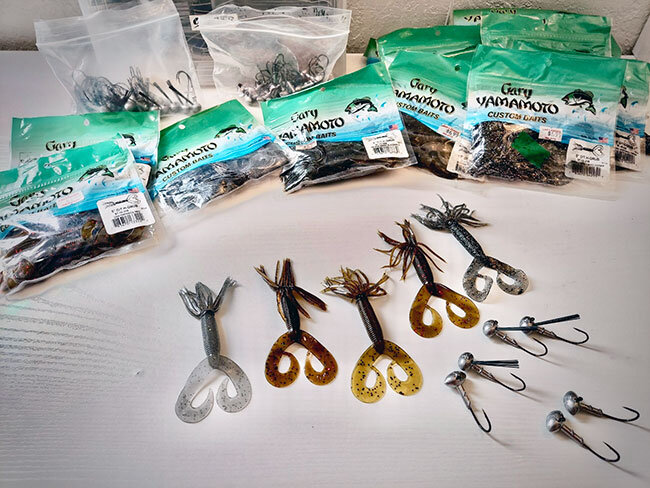
During his top-10 performance at the Wild West Bass Trail Superclean Showdown Pro/Am on Lake Shasta, Meyer caught his fish on a Hula Grub, a Pro Senko and a 5-inch Senko. That trio, he said, handles 90 percent of his dragging work. Here’s how he fishes them.
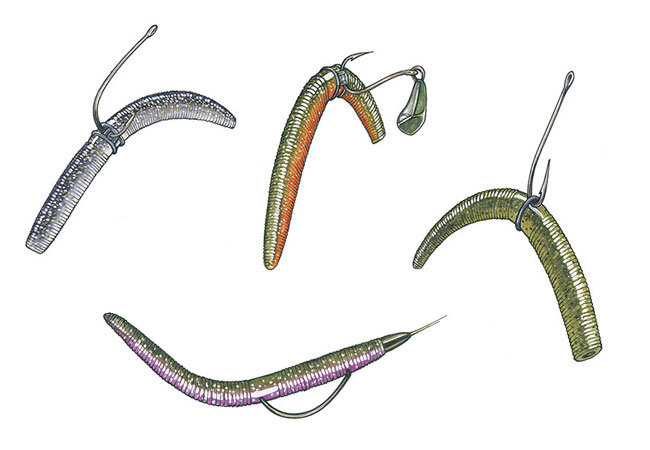
Hula Grub — Pairing perfectly with a football head jig, Meyer said this double tail grub with the wiggling tentacles does a great job of imitating a crawfish. Matching his jig size to the target depth, Meyer relies on this bait’s persistent rocking and rolling motion to tempt aggressive fish.
Pro Senko — This 5-inch bait presents an enticing motion when rigged on an Owner shaky head. With an overall form substantial enough to interest the hungry ones, the subtlety of a Pro Senko’s slender, tapering tail can push reluctant fish over the edge.
5-inch Senko — Meyer uses two rigging options for this flagship bait: An Owner shaky head when he’s fishing around wood, or Neko-rigged on an Owner Sniper Finesse Neko hook for cleaner bottom.
With colors, Meyer starts with crawdad patterns and then adjusts based on forage, water clarity, etc. He also likes to match his football heads and shaky heads to his bait colors for natural continuity.
When the bite is tough, he’ll add a shot of Smelly Jelly to help entice a response.
TACTICAL TIPS
Now, it just makes sense that the dragging technique is predicated on weight — you gotta have something heavy to maintain bottom contact. Just don’t overdo it, Meyer said. Sometimes, less is more.
photo courtesy of majorleaguefishing.com
“Typically, guys want to use the heaviest weight they can to make sure they can feel the bottom,” he said. “That is good, because it creates a lot of ruckus down there; it’ll displace a lot of silt and attract the fish. Plus, those heavy weights are good if you’re trying to learn to feel the bottom.
“But on those tough, post-frontal days, I actually like a lighter weight — maybe a 1/4-ounce. That’s because, with the lighter weight, that bait will just float across the tops of those rocks. You’re still making bottom contact, but you’re not going to snag as much, it’s going to be a little more natural and typically, it’ll generate more bites.”
As Meyer said, the constant struggle to free a heavier rig ensnared by inhospitable rocks nullifies the advantages of a dragging presentation. Whereas, lighter rigs keep the party going with progress interrupted only by a fish bite.
A couple more pointers:
Keep It Straight: Long casts allow maximum strike zone access, but Meyer stresses situational awareness. Specifically, pay attention to the wind.
“You often see guys with a huge bow in their line and that will keep your bait off the bottom,” he said. “I like to drag for a while and then stop just to make sure that bait goes down on the bottom; drag for a little bit and stop.
“Sometimes, you’ll drag off a break and you let some line out. But (on a straight course), you drag 5-10 feet, stop, check it and continue. That way you always keep that bait on the bottom and your chances of getting bit increase."
On the Line: Meyer stresses that braid to fluorocarbon is a must. While he may go as heavy as 15-pound for larger presentations, he won’t hesitate to drop to 6 in clear water. That lighter fluoro also minimizes resistance for a faster sink rate.
Make It Happen: As Meyer points out, a fish with too much time to ponder a stationary bait often says “No thanks,” while the one following a bait that looks like it’s foraging or fleeing across the bottom tends to build more interest. To close the deal, Meyer suggests a little stutter step.
“I like to visualize a fish looking at my bait, and then I’ll give it a quick pop and get that reaction bite.”