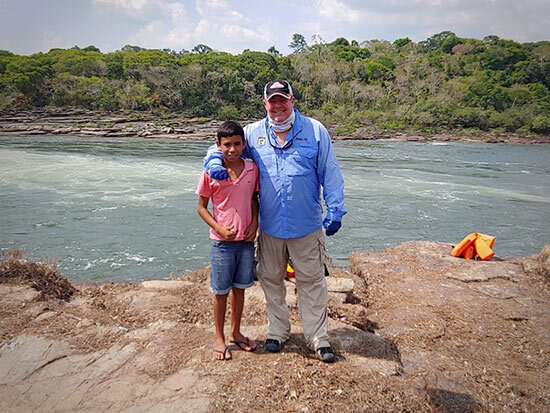

A little over a year ago I was in a remote region of Brazil, not far from Teddy Roosevelt’s “River of Doubt,” and had an opportunity to visit an indigenous village that was effectively removed from the world at large. As I wrote at the time in this blog, “these little sealed-off pockets of the world are shrinking and disappearing by the day. If you want to experience one or more – and I think everyone should – you need to act fast.”
I had no special knowledge at the time, but those words have proven to be prophetic.
Hanna and I recently decided to postpone or possibly cancel our planned December trip to the Amazon. We’ve been leaning in that direction for months, but holding onto the slightest sliver of hope that it would be a go. Perhaps it could have been. Even though Manaus and the Amazon region generally has had a horrible time dealing with COVID, we could have taken proper precautions to minimize our risk of exposure. Nevertheless, as I noted last year, the medical intervention that we take for granted might be completely foreign to the people down there. If we were to bring the disease to a village or area that did not already have it (or one where it was minimal), and where medical care was remedial, it could literally change the course not only of individual lives but also of the region as a whole. Entire groups, and their culture, could be wiped out.
As travelers, we usually parachute in and enjoy the resources, with the bargain being that we pay the local community a pretty price to do so. This whole experience has made me realize that we have more responsibility than that – not just giving lip service to “leaving it better than you found it,” but not adversely altering it by your very presence. To be honest, it’s not something I’d considered much in the past, but going forward I’m going to make an effort to quiz outfitters and tour operators about their commitment to the resources, both natural and human.