

By Gary Dobyns
The California Delta is one of the greatest fisheries in the West and when the bass are spawning, the opportunity level is off the chart. In my experience the most important detail for finding those big spawners is getting out of the strong current.
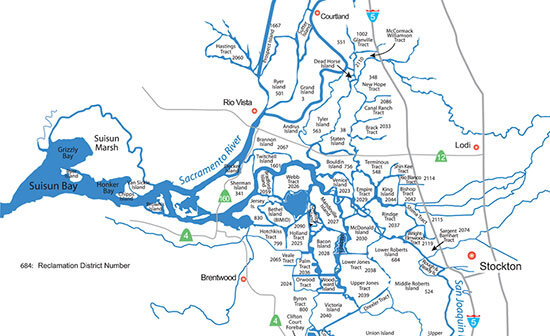
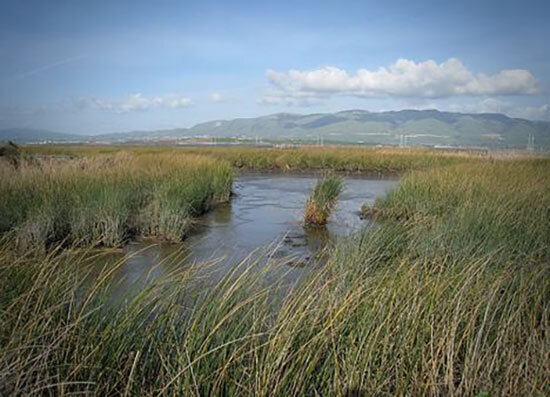
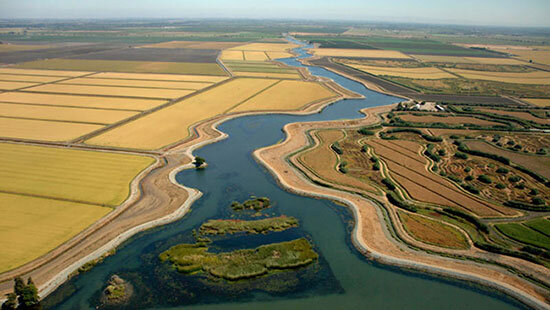
With a couple of major rivers feeding this system and the daily tidal influence, the Delta sees a lot of water movement. Spawning needs a stable environment, so I’m going to look for protected areas like the flooded islands, harbors, marinas and anything out of that main current.
Whether it’s Sherman Island, Big Break, King Island, Little Mandeville, St. Francis Yacht Harbor, or even a shallow bend in the main river that doesn’t get a lot of current; those fish will spawn where they have the least amount of current. Before and after the spawn, those fish often utilize current areas for feeding, but they’re going to bed where they don’t have to worry about their eggs washing away.
You’ll also find them in behind the tules, or even within the tules. A lot of times, you’ll find little patches of open water well inside the tules and these make great spawning areas, because the vegetation breaks the current.
In addition to the current strength, you have to also factor in the Delta’s fluctuating water level. Low tide is always my preference because those fish will always spawn deeper than what the lowest tide level will be. They’ll position their beds in areas where they’re protected even when the tide bottoms out.
For an angler, low water simply allows you to see the fish better and they’re more accessible. In a lot of those Delta places, the water’s not really clear, so if you get 5-6 feet of water over their heads, they’re nearly impossible to see. But during low tide, when they only have 1-3 feet of water over them, they’re a lot easier to see and to fish.
WHAT I THROW
When I’m targeting Delta spawners, I generally find that a 3-stage strategy will handle most scenarios. Here’s how I do it.
Bait 1: I start with a 3/8- to 1/2-ounce flipping jig; something white or white and chartreuse that I can see very well. Color is a big deal because you need to make sure the fish really inhales that bait before you set the hook.
I like a shorter trailer because it helps ensure that the fish gets the entire jig in its mouth. With a longer trailer, they may just nip at the tails and not end up with the hook in their mouth.
I use a Yamamoto PhychoDad craw style trailer because I like the action, but I make a strategic adjustment. I’ll bite off about half an inch and snug it up against my jig so it’s more compact. When I shake that bait, the trailer action drives fish nuts, but with the shorter profile, I miss fewer fish.
Rod: Dobyns Champion 765 flipping stick
Presentation: This is straightforward power fishing. I want big line, a big hook and I want to manhandle them to the boat.
Each fish is different, so how long I spend on a fish really depends on its disposition. Generally, if you approach a bed and the fish stays, you can usually catch it; but if I pitch to a fish and it runs off and doesn’t come back, I’m not going to waste too much time there.
What I like to see is a fish that immediately responds with clear aggression. When I pitch the bait in there and the fish spins around and doesn’t leave, I’m pretty sure I’m going to catch that fish. It might take me 30-40 minutes, but if it’s a big enough fish, I’ll stay there and make it happen.
Bait 2: Swimbaits can be highly effective on bed fish, but I’ve found that a 2-stage strategy works best. I like a smaller swimbait that they can get their mouth around easily, but a lot of time, I can get them going with a large swimbait that will get them fired up.
Rod: For the larger bait, I use a Dobyns 806 or 807 swimbait rod. You can actually pitch very well with those rods and it has enough tip to pitch that bait accurately.
For the small one, I go with a Dobyns Champion 735 or 736. With that smaller bait, they’re going to inhale it and you’re going to catch them, so these rods have enough power to handle big fish.
Presentation: I’ll pitch a 7- or 9-inch Osprey into the bed and a lot of times, I won’t even set the hook if they try to bite this bait, unless I’m certain the fish has it really good. Once I get the fish agitated with that big swimbait, I’ll pitch a 5-inch Yamamoto Swimbait in there and the fish will usually inhale it.
The bigger swimbait sets the mood and then I pitch that smaller swimbait for the catch.
Bait 3: A dropshot can be highly effective for Delta spawners and I like to use with a 5 3/4-inch Yamamoto Kut Tail on a Roboworm Rebarb Hook.
Rod: Even though anglers often fish dropshots on spinning tackle, I use a baitcaster for bed fishing because I can be so much more accurate. My choice is a medium-heavy rod and it’s usually a Dobyns Champion 735. That’s heavier than most people would use, but the Delta often gives you a shot at such big fish, that I want to have maximum control, especially around tules and other cover.
Presentation: I rig my dropshot with a 6-inch leader. I like this shorter setup because it keeps the bait in the fish’s face.
This is my 1-2-3 strategy for Delta spawners. I hardly ever have to use anything else because when I find those big fish in low-current areas I can almost always get them to bite one of these presentations.





I love it when I start to feel that cooling in the air, because I know fall is arriving and the fishing’s gonna pick up. The fall season is my favorite time to throw topwaters, especially on western fisheries, because I know I can count on good quality and numbers of fish.