
When fishing is a grind and every bite matters, finesse tactics can save the day. Today when we think finesse, the Ned Rig, the Drop Shot, and perhaps the Neko Rig come to mind. And rightly so as these techniques catch lots of bass. Sometimes I want to show the fish a little something different, something they don't see very often or perhaps have never seen before. That something different is the Old School Western Split Shot Rig.
The Rig
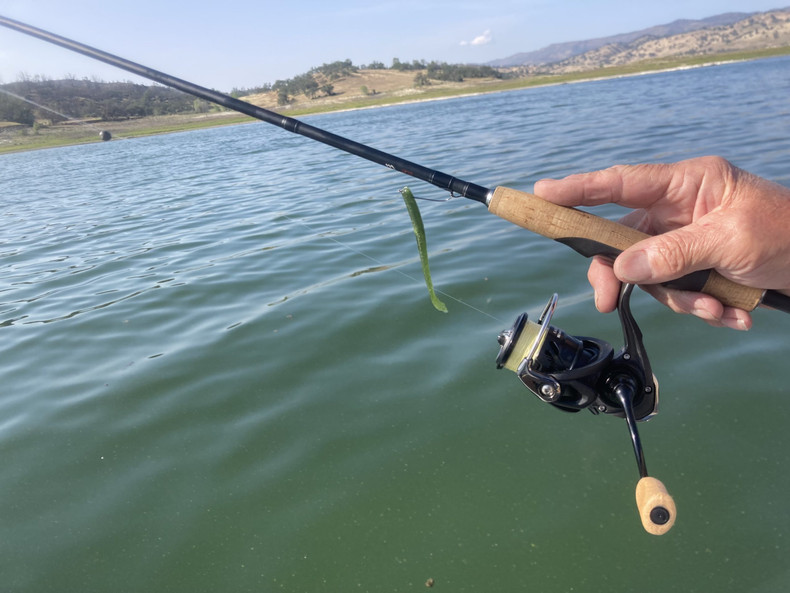
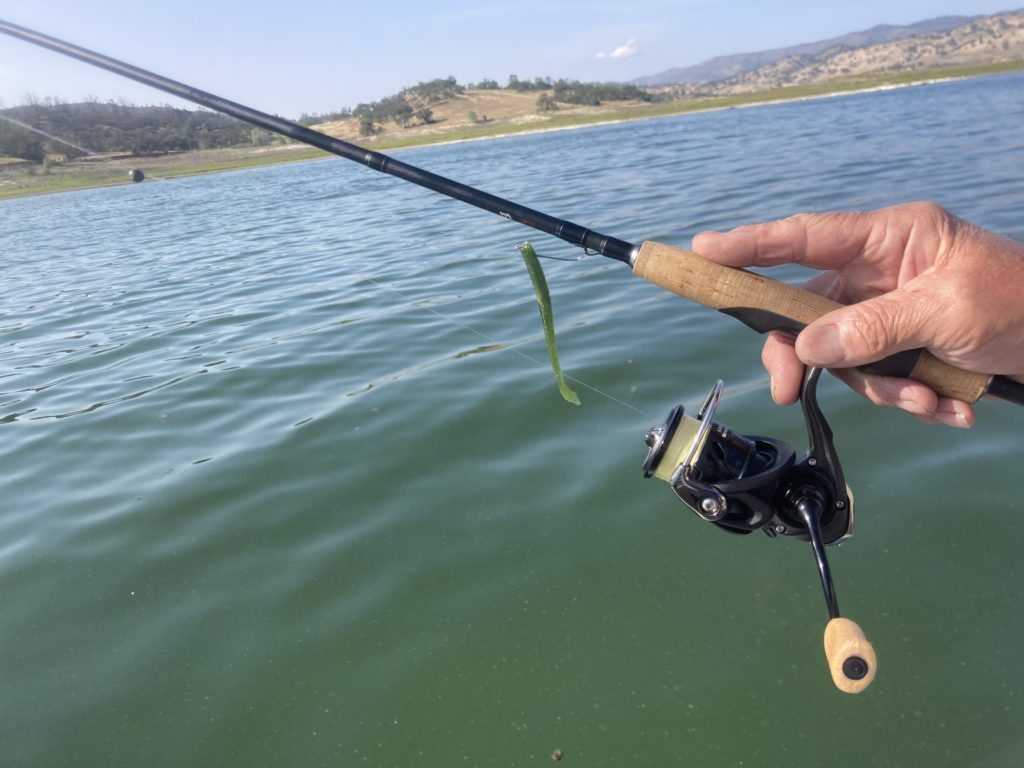
The simplicity of the Split Shot Rig has always intrigued me. Tie a worm hook to the end of your line, Texas rig your favorite small plastic bait, and crimp a lead split shot onto your line above the bait.
There are a lot of soft plastic baits that fish well on the Split Shot Rig. When the technique was first taught to me, hand-poured plastics were the big thing, in particular, the straight tail weenie style worm. Quietly hand pours slowly lost popularity, so much so that today it is hard to find them.
It all changed for me when my team tournament partner gave me a package of Yamamoto Kut Tail Worms to try and this was effectively the end of my preference for hand-poured baits. The Kut Tail quickly became my primary split shot worm, its slender profile and subtle tail action make it a great baitfish imitator. A 4” (002) Smoke or (042) Watermelon Kut Tail rigged on a size 1 light wire offset worm hook and a small round lead split shot weight attached 12” to 18” up the line is one of the most reliable tough bite baits in my arsenal. I am convinced the effectiveness of this rig is the manner in which the Kut Tail enticingly glides and darts behind the small weight and when the Kut Tail sinks, it produces a Senko-like shimmy I like to use the lightest weight that I can get away with and I typically start out with a #2 split shot but will adjust accordingly for wind and water depth. I am not a fan of split-shot sinkers with ears, as they have a tendency to snag a lot and to cause horrible line twist.
Gear Stuff
I am partial to a 7'3” to 7'6” medium-light action spinning rod with a light tip. A long rod has a number of advantages, it allows for long casts, moves a lot of line on the hookset, and protects light line while fighting the fish. I'll pair the rod up with a 2000 or 2500 series spinning reel. When I am fishing shallow water I use a 10lb braid mainline tied to a length of 6lb fluorocarbon leader attached with an Alberto knot. If I am fishing water deeper than 15', I'll opt for straight 6lb fluorocarbon instead to minimize the amount of bow in the line.
Fishing the Split Shot Rig
There are two primary ways I like to fish the Split Shot Rig, the first is to make a cast to a targeted area. Once the rig has reached the bottom, I will begin with a slow steady retrieve but I'll vary the cadence until I can determine what the fish want on that particular day. It is important to maintain consistent contact with the bottom all the while deciphering the signals from the split shot. By far my favorite way to present the Split Shot Rig is to long line the bait behind the boat. I'll make a long cast and use the wind and the trolling motor to perform a controlled drift, letting the rig drag across the bottom. This is a very efficient way to cover water.
I have caught bass all over Northern California with the Split Shot Rig. But for me, I have found it to really shine on deep clear impoundments like Shasta, Pardee, or Folsom. Classic structural elements such as long sloping points, humps, and flats near deep water are all good areas to explore. If you elect only to target high potential areas, you will fail to capitalize on one of the most powerful attributes of the Split Shot Rig, its ability to produce fish from overlooked and nondescript water.
The Split Shot is an easy rig to fish but takes time to master. This brings us to strike detection and the infamous pressure bite. A pressure bite may best be described as just that, pressure, dull pressure. With the advent of braided and fluorocarbon fishing lines, pressure bites have become easier to recognize in contrast to the old days of monofilament. When you get bit, the most efficient way to set the hook is to reel set. Simply start reeling and as the rod loads sweep the rod to set the hook.
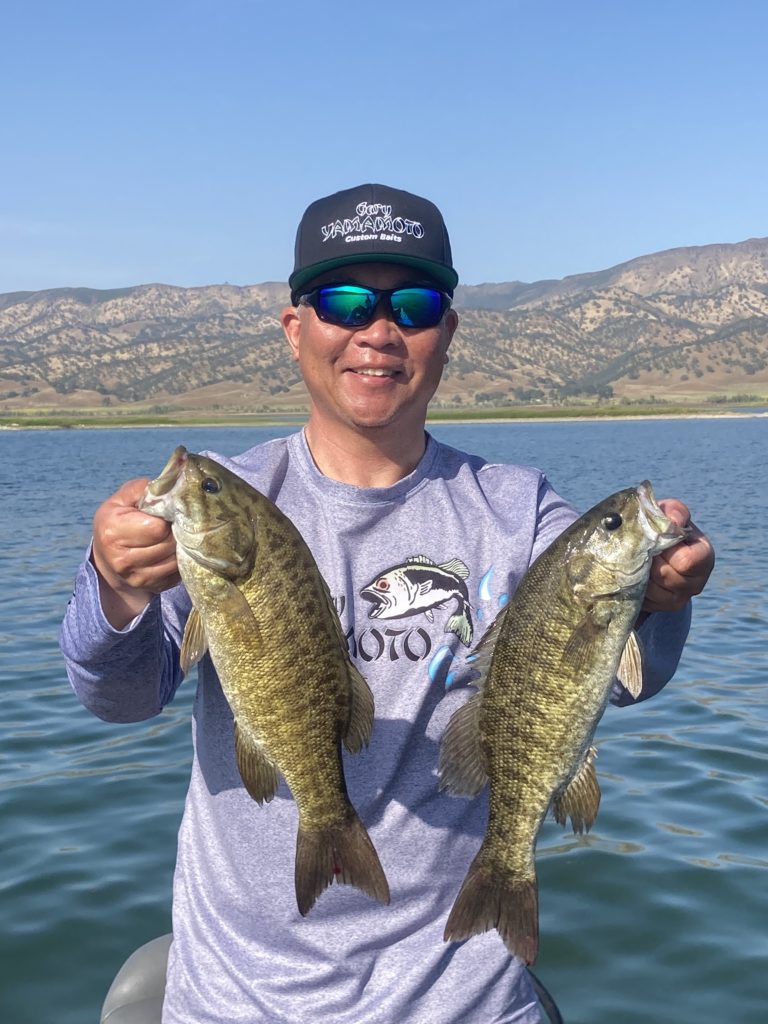
So the next time you want to show those finicky bass a little something different, consider the Split Shot Rig. And, of course, don't forget the Kut Tails.