By David A. Brown
*Images courtesy of BASSMASTER.com
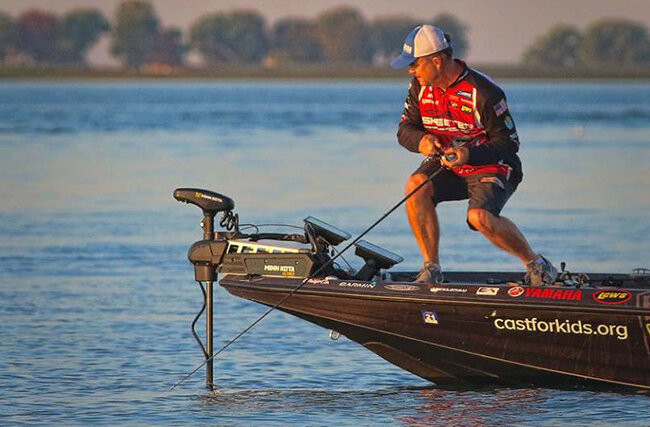
Jay Yelas is a deep thinker — you don’t build such a celebrated career as his without it. Nevertheless, the accomplished pro from Lincoln City, Ore. can be pretty shallow at times — when he’s chasing smallmouth bass, that is.
Yelas displayed his knack for picking of quality smallies in meager depths during the recent YETI Bassmaster Elite on Lake St. Clair, where he placed 9th and never made a cast into more that 5 feet of water. Unlike nearby Great Lakes, St. Clair lacks the plunging depths and, instead has an average depth of about 11 feet. Nevertheless, despite a lot of main lake open water, Yelas hugged the shoreline.
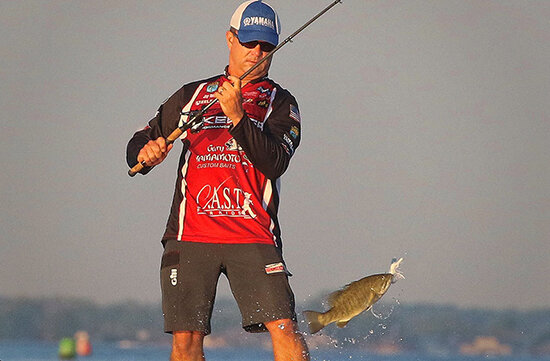
While most of the field targeted more traditional smallmouth habitat in 15-17 feet, Yelas worked a big nearshore flat in the Anchor Bay region of the lake’s northwest corner. Due to COVID-19 limitations, anglers were limited to U.S. waters, but even if the entire lake had been in play, he would have stuck with his shallow plan.
“There are a lot more fish out deep, but there are also a lot more fishermen out deep,” Yelas sad. “I always try to fish shallow on St. Clair and I’ve had some successful finishes in years past. Most of the guys don’t trend in that direction.
“On the first day of practice, I got some good bites on this spot and had a 5-pounder. That clued me in right away to what one pattern on the lake was and I just stuck with that. I had a great week, caught a lot of fish and ended up 3 pounds away from the lead.”
Where They Live
Describing St. Clair as largely devoid of the distinct depth variances that facilitate fish finding, Yelas said he took advantage of what the lake offered. There’s always something different and Yelas used St. Clair’s subtleties to his advantage.
“It was as flat as a pancake; it was featureless as far as bottom contour change, but there was a lot of grass on the flat and that’s what the fish were relating to,” he said. “There was also bottom composition changes where the lake went from sand to a gravel bottom, with a few rocks in certain areas.
“It was mostly a dirt or muck bottom where the grass grew, but there were some hard spots with sand or really fine gravel. The fish would relate to those clean spots next to the grass beds, or an isolated rock pile or a log that had settled on the bottom.”
In St. Clair, or anywhere smallmouth live, Yelas said these random points of transition or cover offer stopovers where the fish could find a meal. Whether it’s gobies, yellow perch or emerald shiners, a smallmouth bass will always investigate the prospect of food, so anything that broke up the sameness was worth a try.
“I think those smallmouth are moving all the time, so you’re subject to catch one anywhere; but you’re more likely to catch one next to a weed edge, a gravel spot or a rock,” Yelas said.
Also important to Yelas’ success was water flow. The St. Clair River Delta’s three main channels wash the area with current pushing all the way down from Lake Huron. This cooler flow refreshes shallow flats, especially on a hot summer day and keeps the food moving for opportunistic smallies.
Power Play
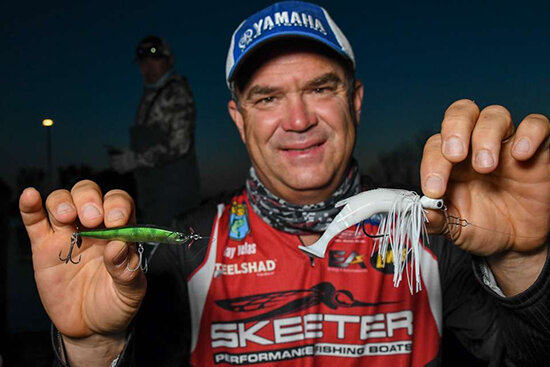
Yelas knows he can catch those shallow smallmouth on a dropshot with a Yamamoto Shad Shape Worm, but he prefers to power fish with a 3/4-ounce Z-Man Jackhammer Chatterbait. On St. Clair, he also threw a brightly colored spinnerbait and used a Duo Realis Spybait as a follow-up bait; but ultimately, he caught all of his weight fish on that bladed jig.
“The reason I was using a heavy bait is that I was reeling it so fast,” Yelas said. “At that speed, a lighter bait would come to the surface.”
Yelas paired his Chatterbait with a Yamamoto Zako trailer. He used the original model (flanged tail) and the paddle tail version, depending on conditions.
“I caught fish on both of those tails, but it seems that in overcast conditions, early morning, or if there was a little wind blowing, the paddle tail is better,” Yelas said. “It has more action and it’s louder.
“The straight tail is for more of a finesse presentation. In calmer, sunny conditions, the fish get a better look at the bait, so that’s when I like to use the original Zako. Every angler needs both.”
On the tournament’s last day, Yelas caught a keeper around 10 a.m. that was snared by the trailer hook. The extra grabbing power a trailer hook offers can definitely pay big dividends, but there area a couple of considerations driving his decision to use it or lose it.
“When you have a trailer hook, the trailer can foul up once every 10 casts with the original Zako, or every five casts with the paddle tail,” Yelas said. “The downside is that you never know when you’re going to put your bait in front of a 5 pounder; but you’ll catch more of the fish that bite with a trailer hook. So, I have a love-hate relationship with trailer hooks.”
Typically, Yelas finds that the trailer hook is most effective at snaring the smaller fish of about 3 pounds or less. The bigger smallmouth will choke the bait, so he rarely uses one when he’s targeting bigger fish.
But aren’t tournament anglers always seeking big bites? Yes, but productive strategies often proceed in stages. In most cases, Yelas will use a trailer hook when he needs to fill a limit and he’s missing too many bites. But once, he has five good ones, he’ll loose the trailer hook, so he knows he’s showing those big fish a perfect presentation.
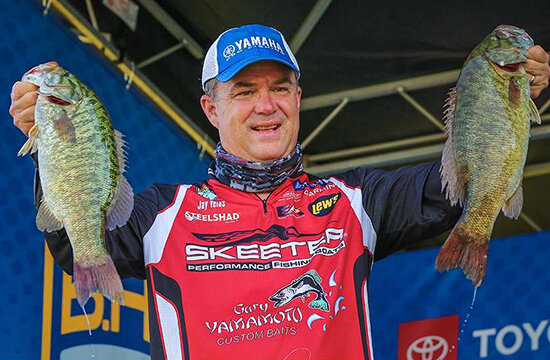
Yelas said his St. Clair tournament exemplified his color preference. White was the overall best choice for the sight-feeding smallmouth, but in super clear water, a green pumpkin trailer with a bluegill Chatterbait skirt did the trick.
Gear Up
Yelas said the foundational element of his shallow Chatterbait success is the outfit on which he throws it. Starting with a 7-4 heavy Lew’s Custom Pro rod gives him the right flexibility for long casts, with the strength he needs to put the brakes on hard-charging smallies. To this, Yelas adds a Lew’s Custom pro reel with a 7.4:1 gear ratio.
“‘That higher gear ration makes it easier to wind that bait at a high speed,” he said. “With a lower gear ratio, I would have had to reel too much to move the bait as fast as I wanted to.”
Yelas fishes his Chatterbait on 20-pound Strike King Tour Grade Fluorocarbon line. That might sound a little stout, but he makes a couple of key points: First, he’s moving the bait so fast, the fish don’t get good look at it. Also, in the shallow zone, he’s not concerned about heavier line holding up his sink rate.
“You can use lighter line, but if they’re eating the bait on heavier line, why change?” He said. “It’s good to have that insurance policy.”