
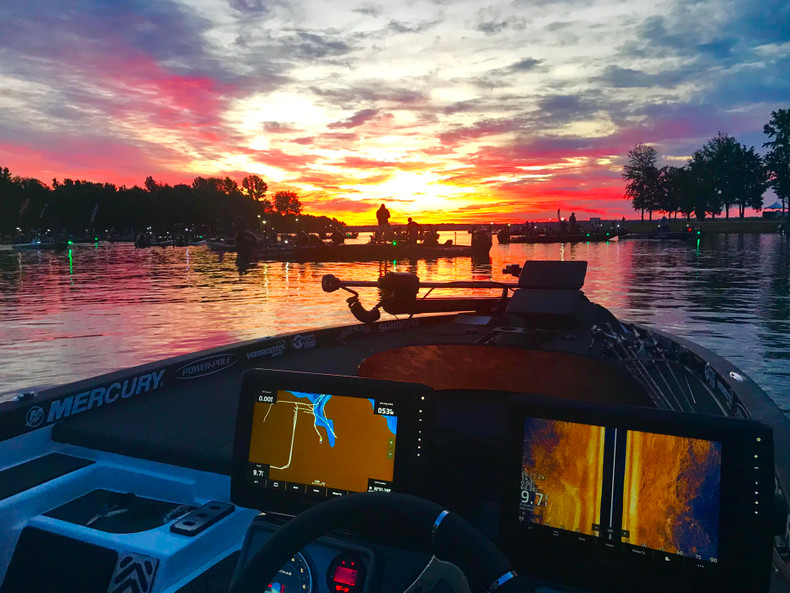
Located in the eastern part of the state, Lake Fork is considered by many as the crown jewel of Texas bass fisheries. The 27,000-acre impoundment is chock full of Florida Strain largemouth. It’s also thick with standing timber and a variety of plant forms. Docks and flooded brush provide additional cover.
Its shoreline features countless points and pockets, any of which can hold trophy-size fish. For that reasons, Lake Fork is a major destination for anglers across the country … all of whom come with the hope of scoring the fish of a lifetime.
Nearly every day of the week, area boat ramps are overflowing with people seeking access. So hosting a major tournament on such a crowded fishery can present problems. And that was the case for many of the Elite Series anglers in this event … including me.
Practice Begins
Having booked a room at the Burning Stump Lodge on the western side of the lake, I chose to use a nearby ramp and work several points in that vicinity. My hope was to find an early morning shad spawn. But after hitting several points in a row at daybreak, it was apparent the bass weren’t using them to ambush prey. The shad were there in abundance, but the bass were not. So, by 8 a.m., I decided to move to some brushy pockets.
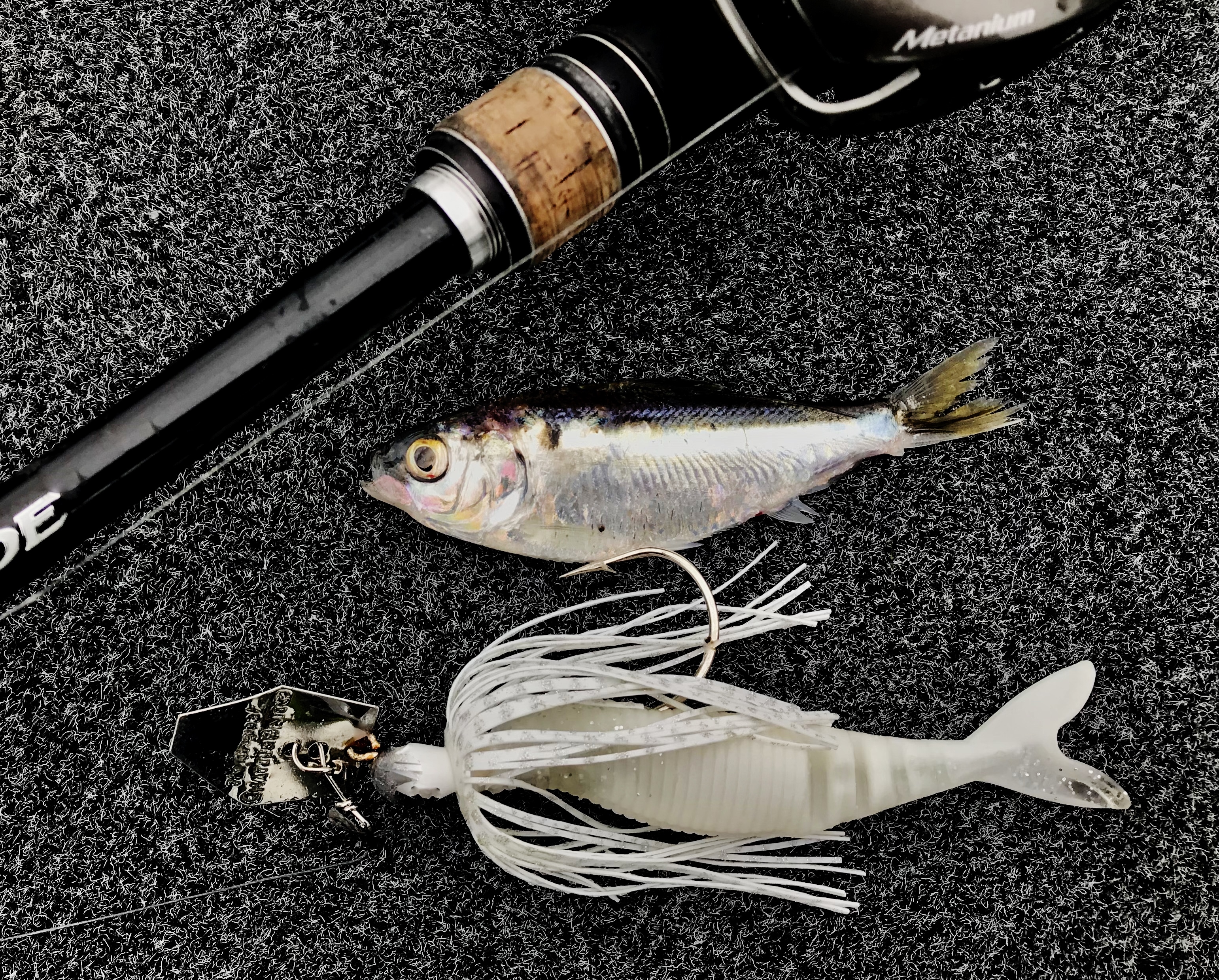
In minutes, I was scoring with a white 3/8-ounce Chatterbait tipped with a Zako trailer. The bites were aggressive and it was fun. The buck brush was in about two feet of water and nearly every fish raced from the interior of a bush to grab the bait. Most were 2½ to 3 pounds, but I did fool a couple over five and one that weighed seven.
By midday, the clouds burned off and I began searching for bedding bass. Although we were at the tail end of the spawn, I was seeing enough to make it worth pursuing. By late afternoon, I marked at least 30 active beds with fish over three pounds.
On day 2, I decided to try another section of the lake.
Still hoping to make the shad spawn work, I decided to try seawalls instead of points. On one particular bulkhead, I found fish busting 3-inch shad along the waterline. After catching two nice bass, a number of catfish came aboard. This was a first for me. I had never witnessed catfish feeding aggressively on a shad spawn. When the schooling stopped, I started running brushy banks with a swim jig.
On one particular stretch of brush, I saw what had to be a fish weighing more than 12 pounds. She was holding over a white spot next to a bush. I marked her coordinates with my Garmin GPS and slowly trolled away, hoping she would be there on tournament day.
Around noon, a nasty line of storms moved in. With lightning crashing all around, I sought shelter in a vacant boathouse, where I remained for hours. When the storm finally passed, I resumed fishing then headed back to the lodge where Dax Davis and his family prepared a large spread of freshly smoked BBQ — something they do each year for the Elite anglers who stay at their lodge. It was a good time to unwind and share in some friendly conversation.
On day 3, I elected to try a stretch of riprap on the dam that produced for me in the past. But after a solid hour of testing various lures and presentations, I gave up and started running pockets to find more spawners. That’s when I realized the water was falling, and that gave me concern.
I decided to revisit some of the better bedding areas to see if the fish were still there. But, by late afternoon, it was clear many were leaving. Wondering what the next day might bring, I pulled the boat out and headed to the Burning Stump to prepare my tackle.
Competition Time
Having an early number in the take-off sequence, I was certain I could get to my best bedding area first. When my number was called, I exited checkout and raced straight there.
Upon arrival, I found bass busting shad along the grass edge. In minutes, I boated a 5-pounder, then a 2½. Wanting to capitalize further on the bite, I quickly moved along the shoreline, slinging my swim jig. But as quickly as it started, the feed was over. Seeing that, I trolled back to the marked beds I wanted to fish.
Immediately, I noticed two were vacant. The third, however, was still occupied by a solid 4-pounder. After a few pitches, I could see he wasn’t quite ready. So I decided to try the next fish 10 yards away. By that time, other competitors were showing up — one of whom was Drew Cook, a sight-fishing specialist.
Wanting to secure the best part of the bank, I backtracked and planted my Power-Poles within range of the two best beds.
One held a pair, the other the single 4-pound male. The pair consisted of a 2½-pound male and what looked to be a 7-pound sow. Although the male was locked on, it was clear the female wasn’t in the mood to play. Rather than waste time on her, I turned my attention back to the 4-pound male guarding the other bed. He bit immediately. But when I set the hook, the fish came to the top and threw the bait. Minutes later, I hooked him again. This time, he tore through the grassbed and pulled off.
Pissed, I turned my attention to the pair. The male bit immediately and, after removing the hook, we weighed and released him. Still, the big female wasn’t ready.
By this time, Drew Cook had caught two of the fish that were on my list of waypoints. Seeing that, I told my marshal we were leaving for another area … that we would come back later in the day, when the big female might be in a better mood.
At the next stop, I was shocked to find so many empty beds. They were deeper and I thought the fish would stay, even with the falling water. With growing concern, I moved to a third area where I caught another 2-pounder. After weighing and releasing it, I pitched to the craw to an adjacent bed. My line instantly jumped. As the fish moved toward deeper water, I set the hook and somehow broke it off. I never saw the fish, so I can’t be sure of its size. But it felt heavy.
Hoping it would return and defend its bed, I made a series of repeat casts. But after 15 minutes, I finally gave up.
My next stop was to the row of buck brush where I saw the 12-pounder in practice. When I got to the sweet spot, I skipped the jig perfectly into place, hoping for a reaction bite. But that fish, too, was long gone.
Having an early check-in time, I told my marshal we were returning to the starting spot to try once more for the big female.
When we rounded the corner, I saw a johnboat working toward the key area. As I brought the boat off pad ahead of him, I noticed he had increased his trolling speed. By the time I dropped the trolling motor, they were less than 30 yards away and closing. I tried explaining that I was in a tournament and would appreciate it if he would yield the spot to me, but his reaction was anything but encouraging.
Grumbling something unintelligible, the man running the boat dropped his Power-Poles and started casting in the direction of the big female’s bed … less than ten yards from my boat. Rather than create further conflict, I turned my focus to the 4-pound fish I had lost earlier. And within a few casts, it bit. But when I set the hook, again, it pulled free. By this time, the two anglers in the johnboat had discovered the big female and were flogging her relentlessly.
Frustrated by the entire situation, I threaded another Yama Craw onto my hook and made a pitch to the fish I just missed. Minutes later, I missed it again. By now, my nerves were in tatters. And just when I thought it couldn’t get any worse, one of johnboat jockeys hooked the big female.
As they battled her to the boat, Drew Cook was idling by. He yelled, “Bernie, what the hell is going on?” In response, I just threw my arms in the air and shrugged.
With Drew was a videographer, filming the entire sequence.
As I re-rigged my bait, I watched the two measure, weigh and photograph the big female … keeping her out of the water for nearly five minutes. Disgusted, I told my marshal we were leaving. And as we trolled away, I scolded the pair for keeping the fish out of water for so long, telling them that it was going to die.
Back at weigh-in, I shared my story. But it did little to soften the blow of a bad day on one of the best lakes in Texas.
One Last Try
On day 2, I ran to a different part of the lake, hoping for a fresh start. When I arrived, I found shad spawning in a small grassbed on the point.
I immediately hooked up with a 5-pounder, but as I played the fish closer to the boat, it jumped and threw my swim jig. Minutes later, I hooked a 2½-pounder and it pulled off in the grass … not the start I was hoping for.
Eventually, I hooked and landed a 3-pounder. A little later, I caught another. When that area dried up, I moved to Little Caney Creek, to an area of matted hyacinths. There, I caught numerous fish by punching a Yamamoto Fat Baby Craw on a 1-ounce tungsten weight.
Between one particular mat and the shore, I noticed a void. Within that void were several bass swimming. One looked to be four pounds and very territorial. While casting at it, I noticed another of equal size holding just to the side. After several presentations, the first fish bit. It weighed 4 pounds, 12 ounces. A little later, I caught its twin. It weighed two ounces more.
Throughout the afternoon, I caught, weighed and released numerous fish. And by day’s end, I amassed a weight of 18 pounds.
Well short of the cut, I pulled the boat out and headed back to the Burning Stump, then to dinner with the Mark Menendez, Will Davis Jr. and Tim Dube. Together, we shared our stories over a few beers and a bushel of freshly boiled crawdads.
Next is the Sabine River. Stay tuned…
Follow Bernie Schultz on Facebook and Instagram, or through his website.