
Lake Norman is North Carolina’s largest manmade body of water. It boasts 32,500 surface acres and roughly 520 miles of shoreline.
Vast and clear, the reservoir is defined by countless points and coves — much of which are lined by docks and piers. To say the lake is heavily developed would be an understatement. It serves as a playground retreat for the residents of nearby Charlotte.
Fortunately, for us, the weather kept most of the recreational traffic off the water throughout the week of our event. The only real concern was for the water level. At five feet below normal pool, many of the more productive docks were rendered useless.
Practice Begins
Believing the spawn had lapsed, my initial search was based on several options. Among them were post-spawn, fry-guarding males, an early morning shad spawn, and resident fish on deeper docks with brush.
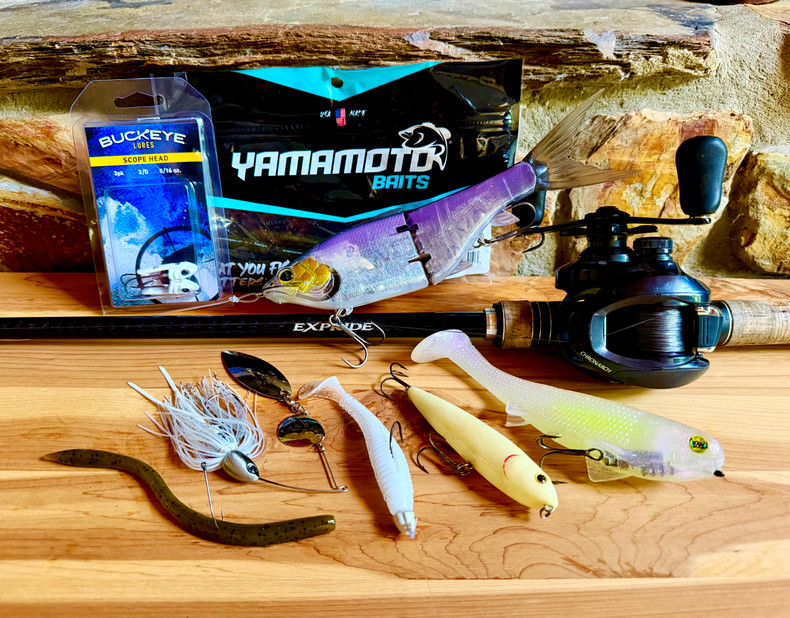
The first morning of practice, I launched near our lodge and idled to the first tapering clay point. The action was immediate. Throwing a 3.2-inch white Yamamoto Shibo Swimmer up shallow, I connected with a 4-pound spotted bass. Right after, I scored two others weighing close to three.
Realizing such quick results, I immediately started running points, scoring on nearly every one. But by 8 o’clock, the shallow swimbait bite ended, so I switched to a topwater, throwing to the ends of the points. There again, I scored several nice fish using a Shimano Current Sniper walking bait.
Filing that away, I started searching short pockets, hoping to find some remnants of a spawn. But by noon, I transitioned to main creek docks. And nearly every dock held a fish — most of which were spotted bass that fell for a wacky-rigged Sensei Worm.
On day 2, I repeated the process … this time focusing on windy points using a 1/2-ounce Hildebrandt Tin Roller spinnerbait. Again, the shad spawn delivered quick results. But by 7:45, that bite was done. So I headed up the river to try some moving water with natural wood cover. And while every stop looked good, I never got a single fish to react. The entire afternoon was wasted.
On day 3, I moved to the west arm of the lake to try some new points. About 9 a.m., a huge electrical storm moved in and I was forced to seek shelter at a nearby marina. While waiting for the lightning to subside, I decided to walk the floating docks and look for suspended fish. To my surprise, I saw several big largemouth up to seven pounds. Not wanting to bother them, I filed each boat slip to memory and left when the storm passed.
I spent the rest of the afternoon fishing large boats and floating platforms, hoping to find more of the same. By day’s end, I felt I was ready. That’s when B.A.S.S. sent out a message that take-off would be postponed until 7 o’clock. Even worse, my predetermined boat number fell in the middle of the pack — boat No. 108. That meant I wouldn’t leave the dock until 7:30 or so. By the time I could reach my most productive points, the shad spawn would be over with.
Needless to say, I was not happy. Almost all of my bigger bites came during those few precious, low-light hours.
Competition Begins
The next morning, I sat fuming while waiting on my boat number to be called. And as I expected, it was past 7:30 when I finally departed take-off.
Knowing my chances for an early bite were slim, I had to try anyway.
Fifteen minutes later, I stopped on my best point. And, as expected, the fish were long gone. Instead of flogging the shoreline with a swimbait or spinnerbait, I opted for the Current Sniper topwater and scored my first keeper. Minutes later, a big fish smashed the lure over deep water and the fight was on. Unfortunately, halfway to the boat, the fish jumped and threw the hook. Disgusted, I fired another cast and kept trying. An hour later, however, none of the next few stops yielded a single strike.
At that point, I moved to the docks I marked during practice and they provided a quick limit. By early afternoon, with the sun high above, I decided to run to the marina that held the big suspended largemouth.
Skipping an Optimum Boom Boom swimbait beneath each moored boat, I detailed every slip one by one. A few minutes in, a large spotted bass followed the bait to the boat, but veered away. A few minutes later, a largemouth weighing between six and seven pounds raced after the swimbait. She was fired up, and would have struck if not for making my boat at the last second.
By this time, frustration was setting in. I had the right size fish located, but I couldn’t make a connection. I tried switching to the wacky rig, then a Yamamoto Uni, but neither produced. When it was time to leave, all I had to show for the effort were a few undersized spots that didn’t help.
Back at weigh-in, I put 9 pounds, 7 ounces of spotted bass on the scale. That left me sitting in the middle of the pack. To make the cut, I would need at least 13 pounds on day 2.
One Last Shot
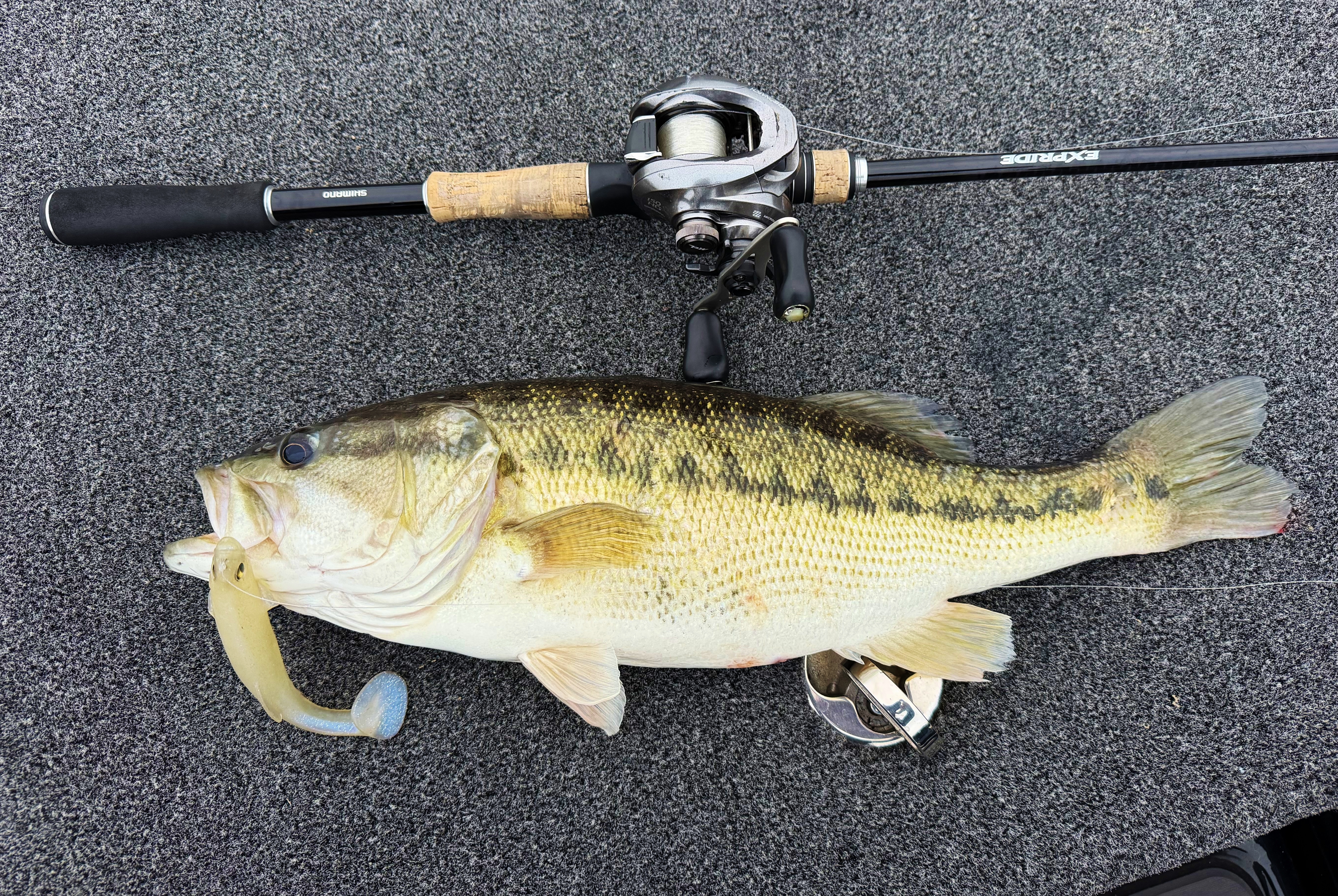
The next morning, I sat and pondered my options. Should I try the points, or skip them and head straight to the marina where I ended the previous day? I settled on the marina, hoping the fish I saw might provide an early bite.
When I arrived, there was another boat already fishing a section of slips. The ones I wanted, however, were still vacant. Poised and hopeful, I approached he stall cautiously, so as not to spook the fish. I alternated between the Optimum swimbait and a Shimano Gravitator glidebait. But after two hours of working the entire marina, not one fish showed itself.
Nearby was a stretch of uncovered slips, secured by a single pilings. I decided to try my luck there, and in just a couple of hours, I had a small limit. Knowing I would need more, I tried the floating docks once again. But after a quick pass, it was clear those fish were gone.
I spent the rest of the day throwing at residential docks, scoring fish after fish. Unfortunately, all were small. When time ran out, I had less than my previous day’s weight. The tournament was a complete bust, and it was time to move on.
Next is Lake Eerie at Buffalo, New York. Stay tuned!