
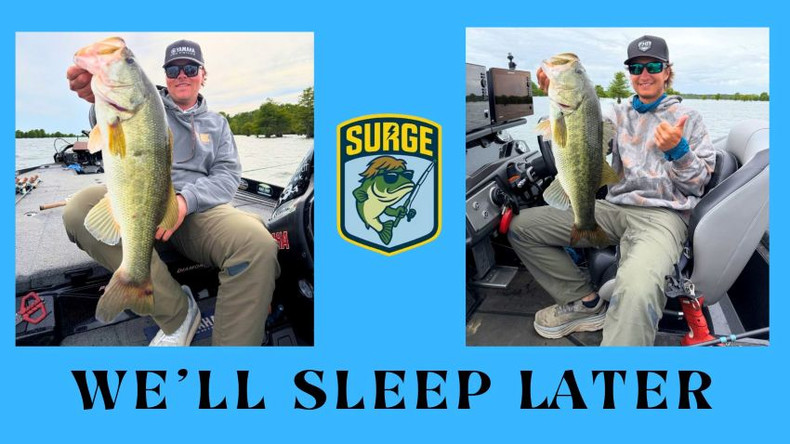
Prior to the Elite Series event on Santee Cooper, I spent a practice day in the boat of Andrew Loberg and another in the boat of Tucker Smith. When I say “a day,” that effectively means dark to dark.
So while there have been many changes since I first started riding with the pros in 1997, the biggest one may not be technology, nor the information highway, nor the fact that some of these kids are groomed to be pros from the womb – but rather the fact that they’re putting in ridiculous amounts of dedicated time to finding the largest groups of quality fish and figuring out how to catch them.
The first pro-am event I fished was an FLW Tour tournament on Buggs Island in the spring of 1997. I practiced with Texas pro Randy Dearman for four days (back then FLW allowed for unlimited practice). Every day we were certainly off during daylight hours, and we typically had time to go to the tackle store and out to dinner.
That wasn’t an outlier experience. Over the years I practiced with top pros including Denny Brauer KVD, David Wharton and many others and always had the same experience. Those efforts took place through 2008. Granted, that’s nearly two decades ago, but it’s not like it’s ancient history.
Now, you’re in the small minority if you’re not burning the candle at both ends. When Loberg – who’d started fishing at 6:45am -- took out at 7:30pm, the marina parking lot was still half-full. The next day Tucker got off to a slightly late start. He needed a minor adjustment and the service crews didn’t get there until 8am. He made up for it by fishing until 8:30pm.
Perhaps in the early days of these marathon sessions some of it was for show, aimed at showing your competitors that you were working harder than the rest of them. Today it’s all about efficiency. Tucker had a good pattern going through 2 ½ days of practice, so he spent the time from 3pm to 8:30pm trying to make something else happen. It never did, but he never gave up on it until he was required to pull the boat out. Most impressively, he made a top 10 in the event fishing neither the pattern that was working nor the one that didn’t pay off. He found a third path. He effectively continued his practice into the competition days.
For better or for worse, this is part of the continuing professionalization of the sport. Competitors can’t leave any stone unturned if they want to consistently stay competitive. If you think you’re ready to join their ranks, try it for a little big. The two young pros had pre-practiced three days at the Pasquotank, drove to Lake Murray, practiced three days there, then fished four and three days, respectively. Practice for Santee started the day after that fourth day, and then they started competition again. That meant long fishing days on 15 out of a 16-day period. Try that, while also keeping your tackle and your life in order. It’s not easy. Even if you can handle the grind, you really have to want it. On their final days out there, they were still going full steam.